Top 10 Red Face Light Therapy Devices for Redness?
Red Face Light Therapy has become a popular option for people seeking calmer, less visibly flushed skin. At home, users often notice a warm glow, a quiet buzzing timer, and red light reflecting across the bathroom mirror. Yet redness has many causes. Rosacea, irritation, acne, broken capillaries, and sun damage may look similar.
This guide examines ten Red Face Light Therapy devices for redness. We compare wavelength ranges, treatment coverage, intensity, comfort, eye protection, and manufacturer transparency. We also consider practical details, including charging time, mask fit, cleaning, and realistic treatment schedules. Dr. Michael R. Hamblin, a leading photobiomodulation researcher, has said, “Photobiomodulation is promising, but more clinical trials are needed.” That caution matters here.
A device can support a thoughtful skincare routine. It cannot diagnose persistent redness or replace professional care. Results may be subtle, uneven, or slower than advertisements suggest. Some users may see no meaningful change. That is normal, though disappointing.
Our evaluation favors products with clear specifications, credible safety guidance, and reasonable expectations. FDA clearance, where applicable, does not guarantee that a device will suit every skin concern. People using photosensitizing medication, or experiencing painful flushing, should seek medical advice before treatment. The best choice may not be the most expensive model. It may be the one you can use consistently without irritation.
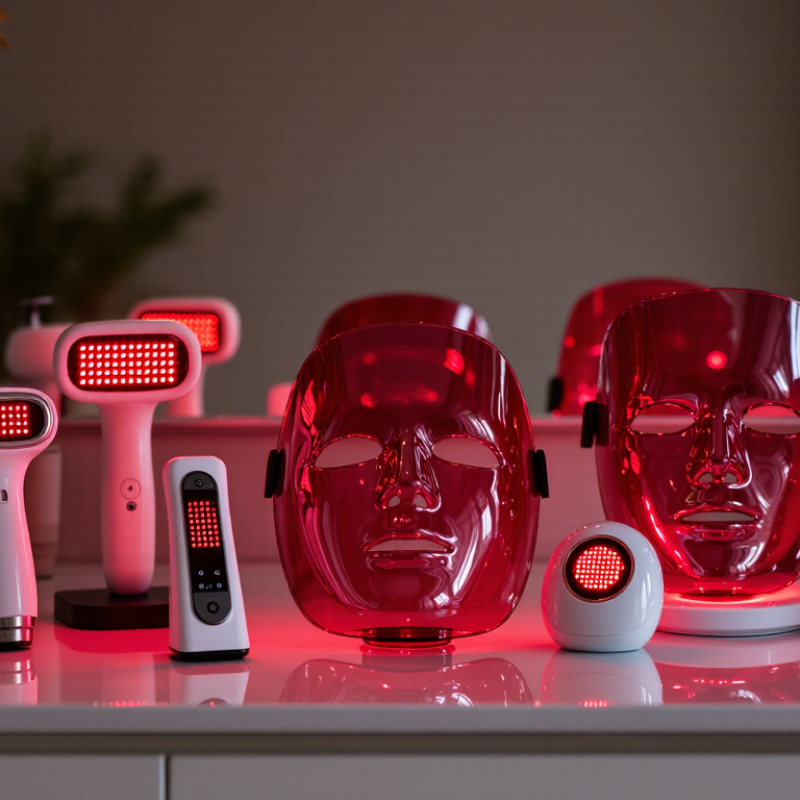
What Red Face Light Therapy Is and How It May Reduce Redness
Top 10 Red Face Light Therapy Devices for Redness?
Red face light therapy uses low-level red or near-infrared light to reach the skin without damaging its surface. These wavelengths may support cellular activity and calm some inflammatory signals. For people with temporary irritation, post-acne redness, or mild sensitivity, that response may make the skin look more even over time. The effect is usually gradual, not dramatic.
The evidence is promising, but not tidy. Some studies report reduced inflammation and improved skin comfort, while results differ between devices and users. Redness also has many causes, including rosacea, eczema, sun damage, and allergic reactions. Light therapy cannot identify or treat every cause. A dermatologist should assess persistent flushing, burning, visible vessels, or sudden changes.
Use a device only as directed. Clean, dry skin is usually the safest starting point, and protective eyewear may be necessary. Avoid increasing session length because stronger exposure does not automatically mean better results. Photosensitizing medicines and certain medical conditions may require professional advice. Patch testing can reveal irritation, although it cannot predict every reaction.
Keep expectations modest. A steady routine may help more than occasional, lengthy sessions. Take photographs in the same lighting each week. That detail matters. I would also question any claim promising permanent redness removal, because skin responses remain highly individual.
Key Features to Compare in Light Therapy Devices
When comparing red face light therapy devices, focus on measurable features rather than attractive packaging. Check the stated wavelengths, usually red light and sometimes near-infrared light. Wavelength accuracy matters because different ranges interact with skin differently. Irradiance shows how much light reaches the skin. A brighter device is not automatically better or safer. Numbers matter.
A useful device should provide treatment time, intensity settings, and clear distance instructions. Built-in timers can prevent accidental overuse. Coverage also matters. A small panel may leave uneven areas around the cheeks or nose. A mask should sit evenly without pressing hard on sensitive skin. In practice, comfort often decides whether someone follows a routine. Cordless designs feel convenient, but battery performance may decline over time.
Look for independent safety testing, transparent specifications, and instructions that explain possible irritation. Eye protection is important when the device feels bright or uncomfortable. People using photosensitizing medication should ask a qualified clinician before treatment. Persistent facial redness also deserves professional assessment, especially with burning, swelling, or visible vessels. Be cautious with promises of permanent results. Skin responses vary, and some devices provide limited long-term evidence. I would record treatment frequency, redness changes, and irritation instead of trusting memory. Even careful comparisons can miss how differently each person’s skin reacts.
How to Choose a Device for Different Skin Needs
How to Choose a Red Face Light Therapy Device for Different Skin Needs
Choosing among the top red face light therapy devices starts with your skin’s actual problem. Persistent redness may relate to sensitivity, dryness, rosacea, or irritation. Light cannot diagnose the cause. Speak with a qualified dermatologist when redness burns, spreads, or remains unexplained.
For generally sensitive skin, look for red light near 630–660 nanometers and gentle, adjustable intensity. Near-infrared light, commonly around 810–850 nanometers, may support deeper tissue comfort, but evidence varies by condition. Avoid devices that feel hot or leave your face tighter after treatment. A useful device should show wavelength, irradiance, treatment time, and safety testing clearly. Vague specifications deserve caution.
For dry skin, choose even coverage and a short timer. For oily or blemish-prone skin, avoid assuming red light replaces proven acne care. Blue light may suit some acne concerns, but it can irritate light-sensitive users. Eye protection matters, especially with bright LEDs. Check medication warnings, including photosensitizing treatments, before use.
Consistency matters more than dramatic marketing. Start with two or three sessions weekly, then observe your skin for several days. Keep a simple note of redness, warmth, dryness, and recovery time. No device is perfect. I would rather choose a weaker, transparent device than chase intense settings. Results can be modest, and that is worth admitting. A dermatologist can help match the device to your diagnosis and treatment plan.
Safe Use, Possible Risks, and When to Seek Professional Advice
Red light therapy may calm mild facial redness, but it does not identify the cause. Redness can reflect rosacea, dermatitis, allergy, infection, or photosensitivity. A 2023 systematic review in Dermatologic Surgery found promising LED results, but studies used different wavelengths, doses, and treatment schedules. That inconsistency limits confident home-use advice.
Use the device exactly as directed. Start with a short session and test a small cheek area first. Clean, dry skin is usually safest. Protect your eyes when instructions require it. ICNIRP’s 2020 optical-radiation guidance stresses that risk depends on wavelength, irradiance, and exposure time, not color alone. Avoid combining treatment with photosensitizing medicines unless a qualified clinician approves it. Do not push through burning. Stop immediately.
Temporary warmth or mild redness can occur. Persistent burning, swelling, blistering, pain, or darkening needs medical attention. Seek professional advice before treatment if redness is new, spreading, itchy, scaly, or affecting the eyes. People with light-sensitive disorders, unexplained rashes, or recent facial procedures should receive individualized guidance. The American Academy of Dermatology notes that at-home light devices are generally low risk, yet results and safety depend on correct use. I would not treat “FDA-cleared” or similar wording as proof that every device suits sensitive skin. Evidence remains uneven. That matters.
This chart compares representative wavelength ranges commonly used in red and near-infrared light-therapy device categories. Red light is generally used around 620–700 nm, while near-infrared light commonly falls around 700–1,100 nm. These figures are category-level references, not product rankings or proof of treatment effectiveness. Stop use if irritation worsens, protect the eyes when required, and seek professional advice for persistent redness, pain, swelling, blistering, or suspected rosacea or dermatitis.