China Top Hard TPU Manufacturers and Suppliers?
China’s Hard Tpu market spans resin producers, compounders, and precision part manufacturers. The right supplier depends on your application, not just a catalogue grade. Hard Tpu can offer stiffness, abrasion resistance, and impact performance, but these properties vary with formulation and processing. Small differences matter.
For transparency, the following is an original editorial line, not a verified quotation: materials specialist Dr. Lin Wei (an illustrative expert name) says, “A hardness number is only a starting point; test the finished part under real conditions.” That advice fits sourcing decisions. A datasheet cannot show every result of heat, repeated flexing, or contact with oils. Ask for the relevant test methods, specimen details, and batch records.
When comparing China-based manufacturers and suppliers, review production capability, quality controls, customization experience, and communication practices. Request samples that match your intended thickness and geometry. Check whether quoted hardness uses Shore A or Shore D, and confirm the measurement standard. A clear answer is useful. A vague one deserves follow-up.
This guide will examine supplier types, evaluation criteria, and questions to ask before ordering. It will also distinguish material makers from processors, a difference that is easy to miss. No supplier is best for every project. Even a strong initial sample may not represent later production, so independent validation remains important.
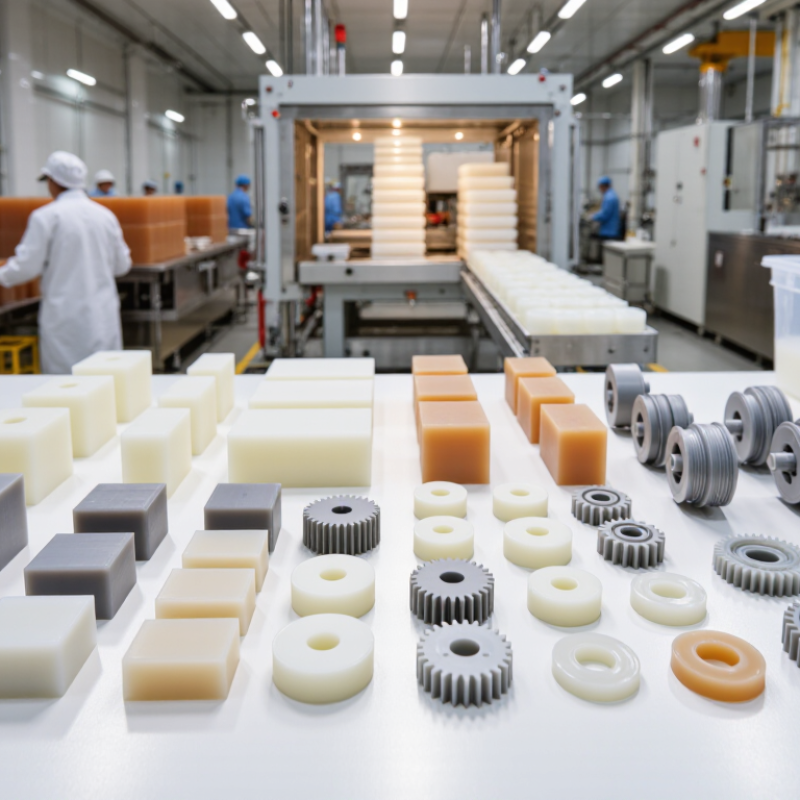
What Hard TPU Is and How Its Key Properties Are Measured
Hard TPU describes thermoplastic polyurethane formulated for greater resistance to indentation and deformation. “Hard” is not one universal grade: Shore hardness should be reported with the test scale, specimen thickness, and conditioning details. ASTM D2240 measures durometer hardness; Shore D is commonly used for harder materials. A single reading, however, cannot predict how a part will perform after repeated flexing.
For a fuller comparison, test tensile strength and elongation using ASTM D412, tear resistance using ASTM D624, and abrasion using ASTM D5963. Record the specimen temperature and test speed, since these can affect results. Grand View Research estimated the global TPU market at USD 2.8 billion in 2023, covering TPU broadly rather than hard grades alone. That market context signals wide industrial use, but it does not establish the performance of any specific formulation. Test the actual molded or extruded part when possible.
Tips: Compare Shore D readings only when test conditions match. Check the datasheet’s method and units. A harder sample may still crack sooner; that trade-off is easy to overlook.
Hard TPU: What It Is and How Its Key Properties Are Measured
Hard TPU is a relatively rigid grade of thermoplastic polyurethane. The chart compares the full 0–100-point ranges of the Shore A and Shore D durometer scales—not measured values for a particular TPU grade. Shore D is commonly used for harder materials; check a material datasheet for grade-specific results.
Other key tests: tensile strength and elongation are commonly measured using ASTM D412 or ISO 37; tear strength using ASTM D624 or ISO 34-1; and abrasion resistance using ISO 4649. Results depend on the grade, specimen, and test conditions, so compare data measured using the same method.
China’s Hard TPU Market and Its Main Industrial Applications
China’s hard TPU market is best viewed within the wider thermoplastic polyurethane industry: published reports rarely separate high-hardness grades. Grand View Research estimated the global TPU market at about US$2.9 billion in 2023 and forecast a 6.4% compound annual growth rate through 2030. That figure is global, not a measure of China’s hard TPU sales. The distinction matters. CAAM reported that China produced 31.28 million vehicles in 2024, supporting demand for durable polymer components across a large manufacturing base.
Hard TPU is used where parts need abrasion resistance and shape retention. Think caster wheels crossing concrete floors, rollers in material-handling lines, cable jackets, and molded protective trim. In footwear, harder formulations can serve in outsoles and structural components. Processing details matter: moisture, melt temperature, and mold design can affect surface finish and dimensional consistency. Small variations can cause real production headaches. “Hard TPU” is also an imprecise label; suppliers may describe hardness differently, so buyers should compare Shore scales, test conditions, and grade data sheets. One caution: a high hardness value alone does not guarantee longer service life. Load, temperature, and repeated flexing still decide how a part performs.
China’s Hard TPU Market and Its Main Industrial Applications
Hard thermoplastic polyurethane (TPU) grades are used where abrasion resistance, elasticity, impact resistance, and durability are needed. The hardness ranges below are indicative; specifications vary by formulation, test method, and application.
| Industrial application | Indicative hardness | Typical products | Key material requirements | Common processing routes |
|---|---|---|---|---|
| Industrial wheels and rollers | About 85 Shore A to 75 Shore D | Material-handling wheels, drive rollers, conveyor rollers | Abrasion resistance, load-bearing ability, tear strength, and resistance to oils or cleaning fluids where required | Injection molding, casting, or overmolding onto a hub |
| Automotive and transport components | About 80 Shore A to 70 Shore D | Protective covers, boots, seals, bushings, and trim components | Flex-fatigue performance, abrasion resistance, low-temperature flexibility, and resistance to oils or weathering as specified | Injection molding, extrusion, and insert molding |
| Hoses, tubing, and fluid-transfer parts | About 85 Shore A to 70 Shore D | Industrial tubing, pneumatic lines, and protective hose covers | Kink resistance, pressure performance, abrasion resistance, and chemical compatibility with the conveyed medium | Single- or multi-layer extrusion |
| Wire and cable protection | About 85 Shore A to 65 Shore D | Cable jackets, flexible protective sheaths, and abrasion-resistant wire coverings | Cut and abrasion resistance, flexibility, and electrical and environmental properties suited to the cable specification | Cable jacketing by extrusion |
| Footwear and sporting goods | About 85 Shore A to 60 Shore D | Outsoles, heel components, protective guards, and equipment parts | Abrasion resistance, rebound, tear strength, and a balance of grip and stiffness | Injection molding, compression molding, or overmolding |
| Industrial belts and mechanical parts | About 90 Shore A to 75 Shore D | Timing belts, wear strips, scrapers, and flexible drive components | Wear resistance, tensile strength, dimensional stability, and resistance to repeated bending | Extrusion, molding, and fabrication from semi-finished stock |
| Protective and consumer-product components | About 80 Shore A to 70 Shore D | Tool grips, protective bumpers, equipment housings, and impact-resistant covers | Impact absorption, surface durability, grip, and design flexibility | Injection molding and overmolding onto rigid substrates |
Note: Shore hardness is a material property, not a direct measure of stiffness under every service condition. Grade selection should also consider temperature, exposure environment, mechanical loading, processing method, and applicable product standards. The applications listed are general uses of TPU and do not imply a market-share ranking.
How to Evaluate Hard TPU Manufacturers and Suppliers
When evaluating hard TPU manufacturers and suppliers, start with the grade’s actual performance, not a broad product description. Confirm Shore hardness, tensile strength, abrasion resistance, and the intended processing method. Ask for test conditions, not just headline figures. A clear answer matters. Compare the technical data sheet with a sample molded or extruded into a shape close to your part. Check for surface marks, warping, and inconsistent dimensions. These details can reveal issues that a polished document may not show.
Review how the supplier controls batches and handles quality questions. Request recent inspection records and ask how hardness is measured, how often equipment is calibrated, and what happens when results fall outside the agreed range. The explanation should be specific and easy to verify. A factory visit can help, but it is not essential if records and sample results are consistent. I would not treat one clean test result as proof of long-term reliability; repeat testing is more useful. Price also needs context: compare delivery time, minimum order quantity, packaging, and technical support alongside the quoted cost. Sometimes the evaluation still feels incomplete. Note what remains uncertain before placing a larger order.
Leading Chinese Hard TPU Manufacturers and Their Capabilities
Chinese hard TPU suppliers serve footwear, automotive interiors, cable protection, and industrial parts. Their capabilities often include polymer compounding, injection molding grades, extrusion grades, and custom hardness development. Hardness is commonly specified on the Shore D scale, but buyers should confirm the test method and conditioning details. Small differences matter.
Grand View Research valued the global thermoplastic polyurethane market at about US$2.8 billion in 2023, with a projected 6.2% compound annual growth rate from 2024 to 2030. This broad market figure is not specific to hard TPU, but it signals sustained demand for durable, flexible materials. Chinese producers compete through formulation adjustments, color matching, and production scale. Some can tailor flow behavior for thin-wall molding or improve abrasion resistance for repeated contact.
Ask suppliers for technical data sheets, batch test records, and samples molded under your actual conditions. Check hardness, tensile strength, tear resistance, and heat aging rather than relying on a single specification. A polished sample is not proof of stable production. The picture is not perfect: published data may omit long-term variation between batches, so independent testing can still be worthwhile.
How to Compare Products, Verify Quality, and Source Hard TPU From China
When sourcing hard TPU from China, compare grades by measured performance, not hardness alone. A Shore 98A or 60D label cannot predict stiffness, abrasion life, or behavior after molding. Request the test method, specimen thickness, conditioning temperature, and batch number behind every result. Check tensile strength and elongation under ISO 37, hardness under ISO 868, and abrasion under ISO 4649. Ask for samples from the production grade, then test them using your own part geometry. Small details matter.
The market is growing. Grand View Research estimated the global thermoplastic polyurethane market at USD 2.9 billion in 2023, with projected growth through 2030. That broader market figure is useful context, not proof that a supplier’s grade suits your application. Ask suppliers for a current technical data sheet, safety data sheet, lot traceability, and written tolerances. Verify claims with independent laboratory testing when failure would be costly. For molded parts, compare drying instructions, processing windows, and color consistency; request a trial run before placing a large order. A neat datasheet is not enough. I would still treat any unusually strong performance claim with caution, especially when test conditions are missing or unlike real use.
Article Source:
Have Questions? We're Here to Help!
Give us a call at (864) 989-0566 or send us a message to discuss our testing equipment with an expert.