China Top FM Transmitters for Global Buyers

China Top Fm Transmitters for Global Buyers

The global radio market remains practical, even as digital media expands. According to the ITU’s World Telecommunication/ICT Indicators Database, radio broadcasting continues to serve broad audiences across developed and emerging markets. Industry analyses from Mordor Intelligence and Grand View Research also indicate steady demand for broadcast equipment, supported by station upgrades, regional coverage projects, and replacement cycles. Fm Transmitters remain central to these systems.

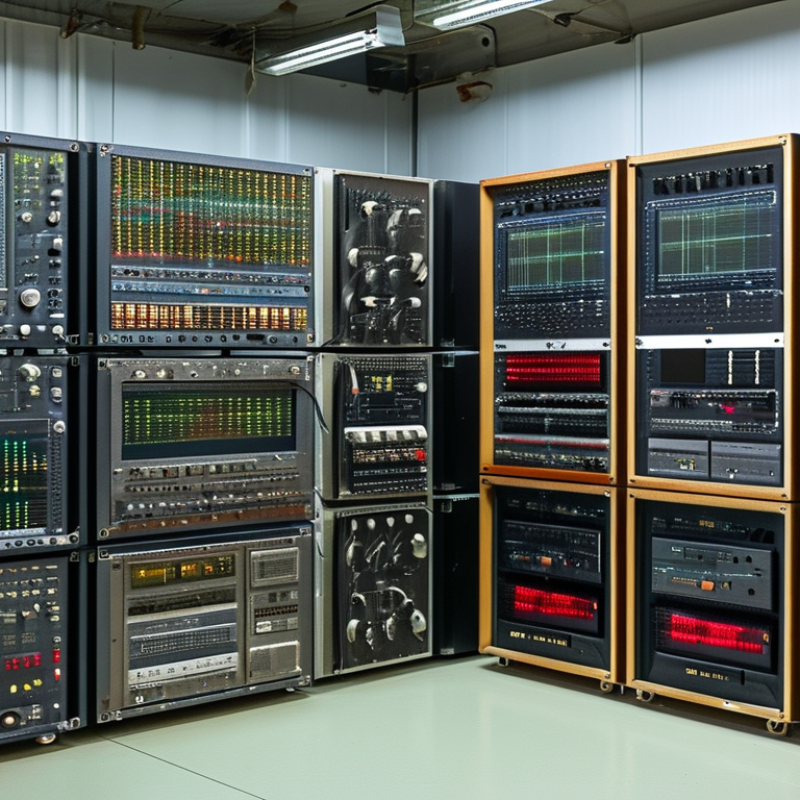
Chinese manufacturers now offer compact exciters, integrated transmitters, and high-power cabinet systems. Typical products range from 30 watts for community stations to several kilowatts for regional broadcasters. Buyers should examine efficiency, cooling design, frequency stability, audio processing, and remote monitoring. A clear front panel matters when technicians work inside a hot transmitter room.

Technical compliance cannot be treated as decoration. ITU-R BS.450 provides important guidance for FM sound broadcasting, while ETSI EN 302 018 addresses radio transmitters in relevant European markets. Local spectrum rules still differ. Certification, EMC testing, harmonic control, and installation support must be verified before purchase.

Market reports offer useful direction, but they do not show every factory’s real performance. No report captures each regional tender or after-sales delay. That is the difficult part. A low quotation may hide weaker components, limited documentation, or slow spare-parts delivery. Global buyers should request test records, efficiency figures, warranty terms, and customer references. They should also compare actual field experience, not only catalog power ratings. Reliability is built in small details, such as clean connectors, stable fans, and readable alarms.

China Top FM Transmitters for Global Buyers

FM Transmitters Explained: 87.5–108 MHz Broadcast Band and Core Functions

China Top FM Transmitters for Global Buyers

FM transmitters convert an audio program into a stable radio-frequency signal. In many markets, the broadcast band runs from 87.5 to 108 MHz. The ITU-R BS.450-4 recommendation describes planning principles for VHF FM sound broadcasting, including channel spacing and emissions control. However, national allocations can differ. The United States commonly uses 88–108 MHz, while other regions may include 87.5 MHz. Buyers should verify local frequency tables before ordering.

A modern transmitter usually includes audio processing, frequency synthesis, modulation, power amplification, cooling, and monitoring. Stereo pilot accuracy matters. So does frequency stability. A small drift can create interference near channel edges. The ITU-R BS.412-9 recommendation identifies protection criteria for FM services, showing why field strength and adjacent-channel planning cannot be treated as minor details. Technical reports from the European Broadcasting Union also emphasize controlled deviation, reliable measurement, and clean emissions. A higher wattage rating alone does not guarantee better coverage. Antenna height, cable loss, terrain, and receiver sensitivity often matter more. This is where product comparisons become imperfect.

Tips: Ask for measured output power, frequency stability, occupied bandwidth, harmonic suppression, and test conditions. Request factory test records, not only marketing figures. A spectrum analyzer check at installation is wise. Even experienced buyers can overlook grounding and ventilation. That mistake is surprisingly common. Use certified technicians and follow the legal requirements of the target country.

FM Transmitters Explained: 87.5–108 MHz Broadcast Band and Core Functions

FM broadcast transmitters operate within the 87.5–108 MHz VHF band in many regions. This chart shows widely used FM stereo baseband reference frequencies and the typical maximum frequency deviation used for broadcast transmission.

Power Classes Compared: 50 W, 300 W, 1 kW, 5 kW, and 10 kW FM Systems

China’s FM transmitters cover five practical power classes: 50 W, 300 W, 1 kW, 5 kW, and 10 kW. The right choice depends on antenna height, terrain, frequency planning, and feeder loss. A 50 W unit suits campuses, resorts, and compact urban areas. A 300 W system offers stronger local coverage without excessive electricity demand. At 1 kW, stations can serve wider city districts, but concrete buildings may still create shadows.

Higher power needs careful engineering. A 5 kW transmitter can support regional service when paired with an efficient antenna and suitable tower height. A 10 kW system provides greater field strength, yet it does not guarantee twice the usable distance. Terrain matters more than many sales charts suggest. The transmitter’s rated output also differs from effective radiated power after cable and connector losses.

Audience demand remains substantial. Edison Research’s The Infinite Dial 2024 reported that 82% of Americans aged 12 and older listened to terrestrial radio weekly. Ofcom’s Media Nations 2024 report recorded weekly radio reach of about 88% among UK adults.

These figures support continued investment, but market size alone should not dictate power selection. Engineers should verify coverage with field-strength tests, thermal measurements, and local spectrum requirements. Bigger is not always better. A 5 kW system may waste energy in a dense city, while 300 W may disappoint across hilly ground. The power ladder is useful, but incomplete.

Key Specifications: 50-Ohm Output, Frequency Stability, Efficiency, and Cooling

China Top FM Transmitters for Global Buyers

A reliable FM transmitter starts with a true 50-ohm output. This impedance matches standard coaxial cable and reduces reflected power. Poor matching can heat connectors, raise VSWR, and shorten amplifier life. ITU-R BS.450-4 identifies frequency accuracy as essential for stable FM broadcasting. In the United States, FCC rules commonly require transmitter frequency tolerance within ±2 kHz. Global buyers should still verify local requirements before shipment.

Frequency stability matters during hot afternoons and cold starts. A temperature-compensated reference helps prevent audible drift and nearby-channel interference. Efficiency also deserves close attention. The NAB Engineering Handbook reports that modern solid-state FM transmitters often achieve roughly 70–80% RF efficiency. That figure sounds impressive, but operating conditions can reduce it. At 10 kW output, even 25% lost energy becomes substantial heat. Every 1 kW of waste heat equals about 3,412 BTU per hour, based on standard thermal conversion data used in HVAC engineering.

Tips: Request measured efficiency, not only a brochure rating. Ask for frequency stability data across the full temperature range. Check cooling airflow, fan redundancy, filter access, and alarm records. Water cooling may reduce room noise, yet it adds pumps and maintenance points. Air cooling is simpler, but dusty sites need disciplined cleaning. I have seen installations fail from blocked filters, despite excellent transmitter specifications. A careful acceptance test remains necessary.

Global Compliance Guide: ITU-R BS.450, CE, FCC Part 73, and Local Licensing

China Top FM Transmitters for Global Buyers

Global Compliance Guide: ITU-R BS.450, CE, FCC Part 73, and Local Licensing

Choosing an FM transmitter involves more than checking output power and price. ITU-R BS.450 provides technical guidance for frequency-modulated sound broadcasting, including key characteristics for stable, clean transmission. It is not a universal approval certificate. Buyers should compare frequency stability, occupied bandwidth, audio deviation, and unwanted emissions against the target country’s rules. Small details matter.

CE marking supports market access in the European Economic Area when the equipment meets applicable requirements, such as radio, electromagnetic compatibility, and electrical safety rules. It does not automatically permit operation on every frequency. Request the EU Declaration of Conformity, test reports, user instructions, and clear product identification. Paperwork should match the exact model.

For the United States, FCC Part 73 governs many broadcast service requirements, but compliance also depends on the licensed station, frequency assignment, power, and installation. Local licensing remains essential worldwide. Authorities may require site data, antenna specifications, emissions testing, or import documents. A transmitter that performs well in a factory test may still fail after cable loss, grounding problems, or incorrect regional settings. That assumption deserves caution. Verify everything. A practical purchasing file should include calibration records, protection settings, cooling requirements, and service contacts. Even one missing certificate can delay deployment.

China Top FM Transmitters for Global Buyers - Global Compliance Guide: ITU-R BS.450, CE, FCC Part 73, and Local Licensing

Compliance Dimension Reference or Market Key Requirement Typical Evidence to Request Buyer Checkpoint
Operating frequency FM broadcast band The transmitter must be configured for the frequency range and channel plan permitted in the destination country. The international VHF sound-broadcasting planning framework commonly covers approximately 87.5–108 MHz, but national allocations may differ. Frequency-range specification, factory configuration record, frequency-setting procedure, and test report. Confirm that the requested frequency can be legally assigned locally and that frequency changes are access-controlled.
Channel spacing ITU-R BS.450 and national frequency plans FM channel spacing, occupied bandwidth, deviation, and emission characteristics must follow the applicable national plan. The exact channel raster is not identical in every market. Modulation and spectrum-mask test results, technical manual, and configured channel plan. Do not rely on a generic “worldwide” setting; obtain destination-market configuration details.
Frequency deviation ITU-R BS.450 / national broadcast rules Peak frequency deviation, including any permitted pilot, stereo, or data subcarrier operation, must remain within the limits imposed by the applicable administration. Calibrated deviation-meter results and modulation-monitoring procedure. Verify the transmitter supports stable adjustment and includes protection against excessive modulation.
Occupied bandwidth and emissions ITU-R BS.450 / regional spectrum regulations The RF output must meet the assigned channel, out-of-band emission, unwanted-emission, and spectral-mask limits applicable to the licensed service. Spectrum-analyzer plots, RF test report, harmonic and spurious-emission measurements. Request results at the intended operating power, frequency, modulation, and load conditions.
RF output power Local license and station authorization Permitted transmitter power and effective radiated power are determined by the local regulator, antenna system, site, coverage objective, and interference conditions. Rated-power specification, power-control range, calibration record, and thermal-performance data. Match the equipment rating to the authorized power; a higher-rated transmitter does not itself grant permission to operate at higher power.
RF harmonic suppression ITU-R principles and national emission limits The transmitter should incorporate filtering and RF design measures that limit harmonics and other unwanted emissions to the applicable regulatory limits. Harmonic-emission table, filter specification, and conducted RF test report. Check measurements across the complete operating band, not only at a single test frequency.
European Union market CE marking under the Radio Equipment Directive 2014/53/EU Applicable radio equipment must satisfy the RED essential requirements for health and safety, electromagnetic compatibility, and efficient use of radio spectrum before being placed on the EU market. EU Declaration of Conformity, technical documentation, applicable test reports, user instructions, and CE marking information. Confirm that the documentation covers the exact model, frequency range, power level, antenna conditions, and final hardware configuration.
European radio testing Applicable harmonized European standards Sound-broadcasting transmitters may be evaluated against the current applicable harmonized standards, including standards in the EN 302 018 series where relevant, together with EMC and safety requirements. Standards list, accredited-laboratory reports, EMC results, and radio-spectrum test results. Check the edition and scope of each cited standard at the time of market placement.
United States market FCC Part 73 FM broadcast stations must comply with the applicable FCC broadcast rules, including technical operating parameters, authorized frequency, power, emissions, and station responsibilities. FCC equipment authorization or applicable certification records, FCC rule references, test reports, and transmitter operating manual. Verify the exact transmitter model and configuration against the authorization; an imported unit still requires lawful station operation.
U.S. station licensing FCC license and construction authorization A broadcaster generally needs the appropriate FCC authorization before constructing or operating a full-power FM station. Equipment compliance does not replace the station license. Station authorization, construction permit where applicable, license data, and approved technical parameters. Confirm site coordinates, antenna height, effective radiated power, frequency, and emission limits.
Electromagnetic compatibility CE, FCC, and local EMC requirements The equipment must control conducted and radiated interference and maintain performance in the intended installation environment. EMC immunity and emissions reports, grounding instructions, installation requirements, and cable specifications. Assess the complete system, including exciter, power amplifier, power supply, rack, cables, filters, and antenna interface.
Electrical safety Destination-country safety rules Mains input, protective earth, insulation, temperature, accessible parts, and fire safety must comply with the applicable product-safety framework. Safety test report, wiring diagram, rated-input data, protective-earth instructions, and user manual. Confirm compatibility with local voltage, frequency, plug, breaker, ventilation, and earthing requirements.
Antenna and transmission line Site engineering and local authorization Antenna gain, feeder loss, polarization, impedance, reflected power, and effective radiated power must be compatible with the licensed installation. Antenna specifications, VSWR limits, connector details, feeder calculations, and site-engineering documents. Use a suitable dummy load during commissioning and verify reflected-power protection before connecting the antenna.
Local licensing National or regional communications regulator Most countries require frequency assignment, broadcast authorization, site approval, and sometimes separate import, spectrum, environmental, or tower permissions. License checklist, application forms, regulator correspondence, site coordinates, and approved technical parameters. Identify the regulator before purchase and confirm whether the buyer, installer, or supplier must submit each document.
Import and shipment documents Customs and market-entry controls Commercial invoices, packing lists, product descriptions, serial numbers, tariff classifications, and conformity documents may be required for customs clearance and market entry. Commercial invoice, packing list, certificate of origin where required, declaration of conformity, and product data sheet. Ensure the model number and technical description are consistent across the product, invoice, manuals, and compliance files.
Factory acceptance testing Pre-shipment quality control Before shipment, verify output power, frequency accuracy, modulation performance, efficiency, cooling, alarms, interlocks, reflected-power protection, and emissions. Signed factory test report, calibration information, serial-number record, photographs, and burn-in results. Specify test conditions and acceptance limits in the purchase contract, including the intended destination configuration.
Installation and maintenance Operational compliance Routine monitoring, calibration, maintenance, recordkeeping, and authorized technical control are necessary to keep the station within its licensed parameters. Installation manual, maintenance schedule, alarm list, service procedure, spare-parts list, and operating log template. Confirm local service capability, replacement-part availability, remote-access controls, and procedures for preventing unauthorized RF changes.

Note: Compliance depends on the final transmitter configuration, installation site, antenna system, operating frequency, authorized power, and destination-country rules. ITU-R recommendations provide international technical guidance, while national regulators determine licensing and legally permitted operation.

How to Choose China-Made FM Transmitters by Coverage, Budget, and Service Support

Choosing China-made FM transmitters starts with real coverage needs, not the highest wattage listed. A rural station may need stronger output and a suitable antenna system. An urban station may require less power because buildings create reflections and signal loss. Ask suppliers for coverage estimates based on terrain, antenna height, frequency, and receiver sensitivity. A practical site survey is more reliable than a sales chart.

Budget planning should include the transmitter, antenna, feeder cable, installation, testing, and spare parts. Low purchase prices can hide costly cooling issues or limited control functions. Compare efficiency, operating stability, audio input options, and protection against overheating. Request test records, manuals, and production details. I have found that vague answers usually deserve a second review. The cheapest unit is not always the economical choice.

Tips: Match rated power with your licensed operating plan and local technical rules. Confirm voltage, frequency compatibility, warranty length, repair procedures, and available replacement parts before payment. Ask whether remote monitoring is supported and whether the supplier can provide setup guidance in English. Service support matters when a transmitter fails during bad weather. A clear response time is worth more than a polished brochure.

Request a Quote

For more information on our instruments, consumables, or services, or to request a quote, complete the contact form below, and one of our associates will reach out to you!

Request a Service Quote

To request service on your machine(s), complete the contact form below, and one of our associates will reach out to you!

Browse by:

  • Test Property
  • Manufacturer