How to Choose the Best EOT Crane for Your Business Needs?
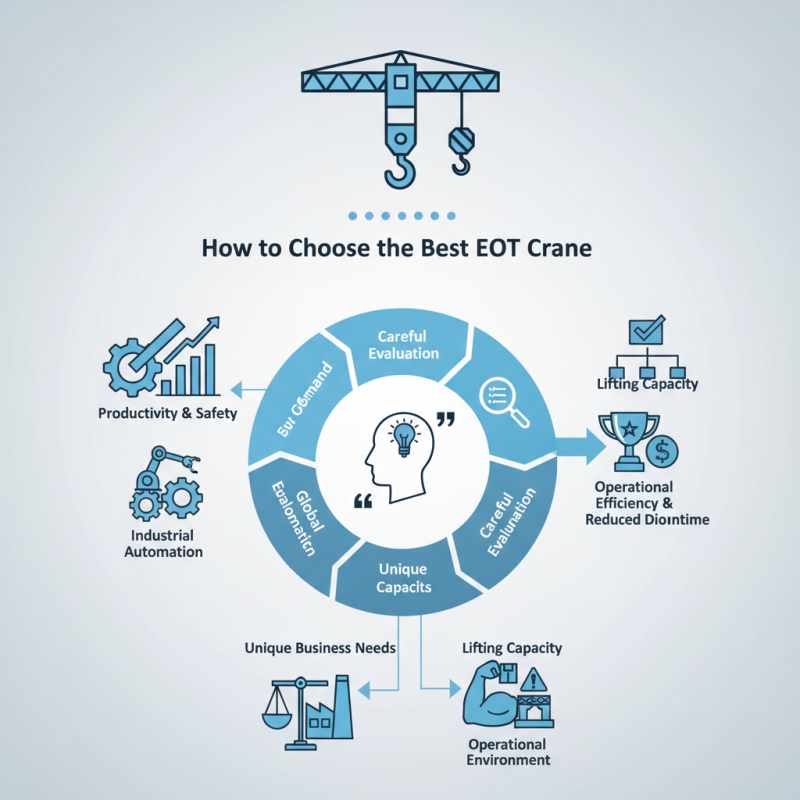
Choosing the right EOT Crane for your business can significantly impact productivity and safety. According to a report by the Material Handling Industry of America, the global demand for EOT cranes is projected to grow by 5.2% annually. With increasing industrial automation, selecting the ideal crane has never been more crucial.
Experts emphasize the need for careful evaluation. John Smith, an EOT crane specialist, notes, “The right crane can enhance operational efficiency and reduce downtime.” Each business has unique needs that influence crane selection, from lifting capacity to operational environment. A mismatch can lead to financial losses and safety hazards.
The complexity of this decision requires thoughtful consideration. You might feel overwhelmed by options available. Identifying key performance indicators specific to your operations is vital. Invest time in understanding what EOT Crane features align with your goals. This process can ultimately shape the success of your material handling tasks.
Understanding EOT Cranes: Definition and Functionality
Electric Overhead Traveling (EOT) cranes are vital in numerous industries. They perform material handling, enhancing efficiency and safety. An EOT crane consists of a hoist, trolley, and bridge. It moves along a fixed rail, allowing for precise control of heavy loads.
Choosing the right EOT crane starts with understanding its load capacity. The Crane Manufacturers Association of America states most cranes can lift between 1 to 100 tons. The operational environment also plays a role. Indoor cranes differ from outdoor ones, particularly in durability and weather resistance.
Tips for selecting the best EOT crane: Assess your lifting needs. Identify the maximum load weight and the frequency of use. Check the maintenance requirements too. Neglecting this can lead to costly breakdowns.
Additionally, the span of the crane is critical. A longer span allows for more versatile operations. However, this might compromise stability. Balancing span width and load capacity requires careful evaluation. Always consult with experts to ensure your choice aligns with safety standards.
Assessing Your Business Needs for an EOT Crane
When assessing your business needs for an EOT crane, start by evaluating the specific tasks your operation requires. Consider the weight of the loads you typically handle. Understand how frequently you lift and move materials. This insight will inform the crane's capacity and operational speed you need.
Think about the space available for installation. The height and width in your facility play a crucial role in crane selection. If space is limited, a more compact design may be necessary. The mobility of the crane can also impact your workflow. A fixed crane might suit some operations, while a mobile option could offer more flexibility.
Safety features should not be overlooked. Consider the potential hazards in your environment. A crane with advanced safety systems and monitoring capabilities can provide crucial support. Reflect on past handling incidents; these lessons can guide better choices. Always keep in mind that your needs may evolve. Regularly revisit your crane specifications to ensure they align with your business growth.
Factors to Consider When Choosing an EOT Crane
Choosing an EOT crane requires careful consideration of several key factors. First, assess the load capacity you need. Understand the maximum weight your operations will require. This will guide you in selecting a crane that can handle your workload without compromise. Consider the height of your facility as well. Insufficient height can limit the crane’s effectiveness and lead to operational delays.
Next, think about the environment in which the crane will operate. Will it be indoors or outdoors? Will it face harsh weather conditions? Adverse environments may necessitate specialized materials for the crane. Durability and resistance to corrosion are paramount. Evaluate the type of controls you prefer as well. Automated systems can enhance efficiency but may increase complexity.
Finally, review your budget. It’s crucial to balance quality with cost. Investing in a reliable crane may save money in the long run, reducing maintenance and downtime. Be aware of the many options available, yet choose thoughtfully. Reflection on past experiences can inform your decision-making process. Even small details can significantly impact your operational success.
Types of EOT Cranes and Their Specific Applications
When choosing an EOT crane, understanding its types is crucial. Bridge cranes are widely used in manufacturing. They have a single or double girder design. A single girder is lighter, suitable for lighter loads. In contrast, a double girder crane can handle heavier items. This makes it ideal for industries like steel or automotive.
Then, there are gantry cranes. These cranes operate on the floor rather than overhead rails. They are mobile and versatile, often used in outdoor settings. Their ability to transport materials across open spaces makes them valuable in construction. Some businesses, however, may struggle with space limitations when using gantry cranes.
Jib cranes are another option. They provide excellent reach for limited areas. This makes them suitable for assembly lines and workshops. However, their capacity is generally lower compared to larger cranes. Each type has its advantages and drawbacks, making it vital to assess your specific needs carefully. Factors like load capacity, space availability, and operational environment should guide your decision-making process.
How to Choose the Best EOT Crane for Your Business Needs? - Types of EOT Cranes and Their Specific Applications
| Type of EOT Crane | Load Capacity | Span | Usage Scenario | Advantages |
| Single Girder EOT Crane | Up to 10 tons | 5 to 30 meters | Manufacturing and Warehousing | Cost-effective, space-saving |
| Double Girder EOT Crane | 10 to 100 tons | 10 to 35 meters | Heavy Manufacturing, Steel Industries | Higher lifting capacity, stability |
| Under-slung EOT Crane | 1 to 20 tons | 5 to 30 meters | Workshop, Assembly Lines | Utilizes existing structures, flexible |
| Explosion-proof EOT Crane | 5 to 20 tons | 10 to 30 meters | Chemical, Oil & Gas Industries | Safety in hazardous environments |
Budgeting and Maintenance for Your EOT Crane Selection
When selecting an EOT crane, budgeting and maintenance are crucial factors to consider. Setting a budget can be challenging. Costs can vary based on features, capacity, and technology. It's essential to analyze the initial purchase price and ongoing operating costs. Think about installation and training expenses too. They can add to your overall budget.
Maintenance is another critical aspect. Regular maintenance ensures the crane functions safely and efficiently. Neglecting upkeep can lead to costly repairs and downtime. Create a maintenance schedule. Include inspections, lubrication, and replacement of worn parts. Proper training for your team can help prevent mistakes and extend the crane's lifespan.
It's important to choose a crane that meets your operation needs without overspending. Reflect on past experiences with equipment. Learn from previous mistakes to avoid repeating them. Balance your budget against anticipated maintenance costs to make a reliable choice. Consider all these elements to ensure you select the best EOT crane for your business needs.
Cost Analysis of EOT Cranes for Different Industries