How to Choose the Right Tensile Testing Machine for Your Needs?
Selecting the right tensile testing machine is crucial for effective material evaluation. According to a recent report by Smithers Pira, the global market for testing equipment is projected to grow steadily, with tensile testing machines being a significant component. These machines provide essential data on material strength, flexibility, and overall performance, making them indispensable in industries like manufacturing and construction.
Proper selection of a tensile testing machine depends on various factors, such as material types and testing standards. For instance, the ASTM D638 standard outlines specific requirements for plastics testing. Ignoring these factors could lead to inaccurate results, ultimately affecting product quality and safety. Furthermore, industry experts often emphasize the importance of machine precision and data accuracy for reliable testing outcomes.
A subpar choice may not meet specific testing needs, leading to inefficiencies. It is vital to consider both the operational features and the technical support provided by manufacturers. In conclusion, understanding your requirements and the capabilities of different tensile testing machines can significantly impact your testing process and, consequently, your end product quality.
Understanding the Basics of Tensile Testing Machines and Their Functions
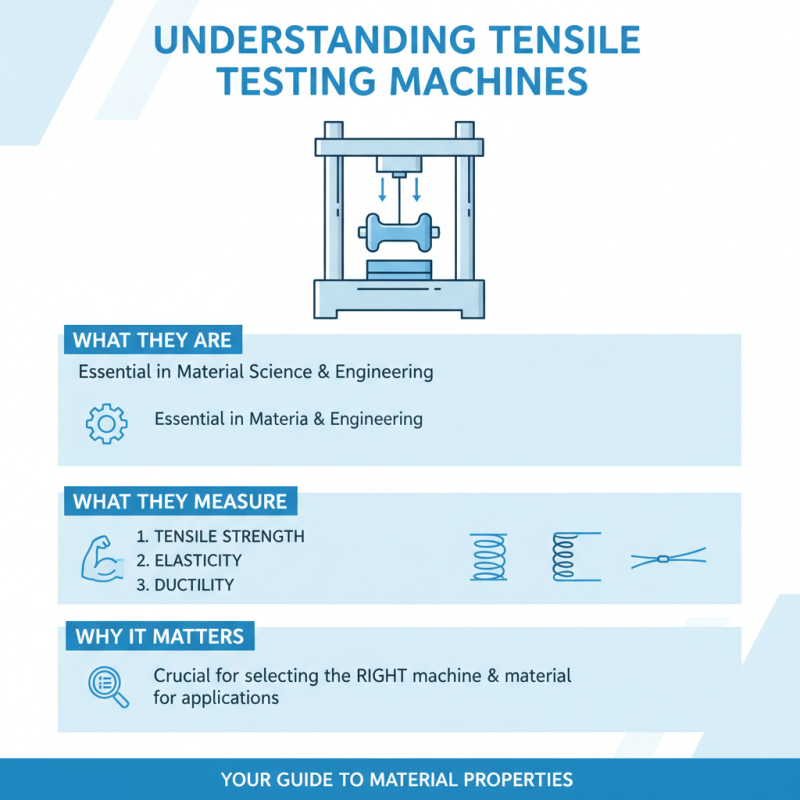
Tensile testing machines are essential in material science and engineering. They measure material properties like tensile strength, elasticity, and ductility. Understanding how these machines work is crucial for selecting the right one.
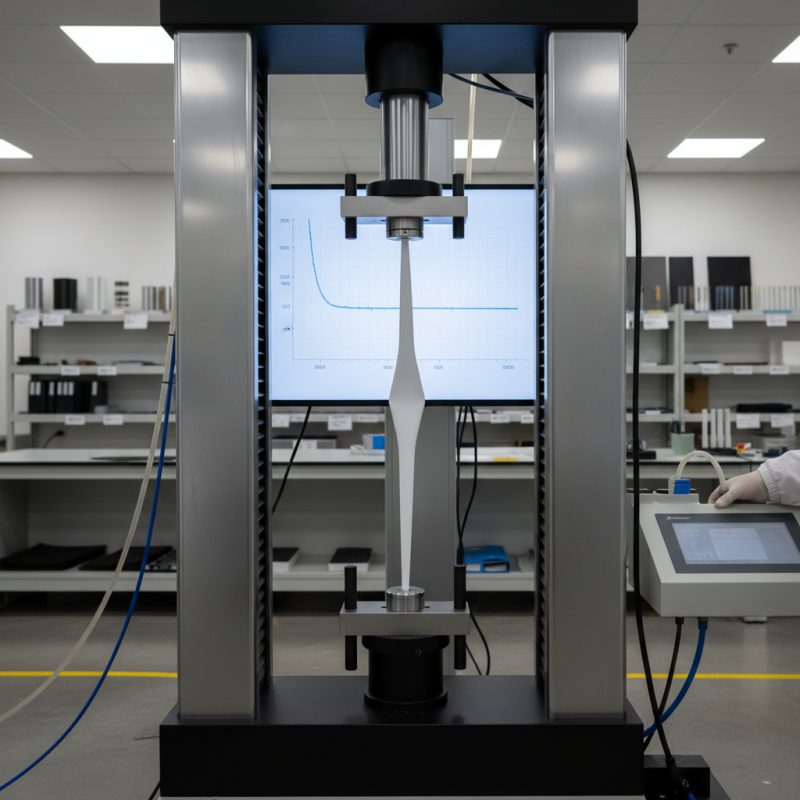
A typical tensile testing machine consists of a load frame, gripping mechanisms, and data acquisition systems. The load frame applies a controlled tension to the test specimen. According to a recent industry report, these machines can measure forces up to 5,000 kN. Various grips, such as wedge grips and pneumatic grips, hold the material securely during the test. The choice of grip influences the test accuracy.
Data obtained from tensile tests aids in quality control and research and development. For instance, it helps engineers determine how materials perform under stress. This data influences decisions in sectors like aerospace and construction. The precision of these machines is vital. Small errors can lead to significant discrepancies in material performance assessments. Always consider factors like machine calibration and operator training to ensure reliable results.
Key Parameters to Consider When Selecting a Tensile Testing Machine
Selecting the right tensile testing machine involves understanding several key parameters. One of the most crucial factors is the load capacity. Machines vary widely, with capacities ranging from 1 kN to over 10,000 kN. Choosing a machine that aligns with the expected material strength is essential for accurate results. For instance, plastics typically require a lower capacity than metals. Industry reports indicate that 45% of testing errors arise from mismatched load ratings.
Another important parameter is the speed of testing. Typical rates can range from 0.1 mm/min to 500 mm/min. This speed can drastically influence the material behavior observed during testing. A study highlighted that maintaining an appropriate speed reduces the likelihood of dynamic effects, which can distort results. Consider the materials often tested. If high precision is vital, a slower speed might be more appropriate.
Lastly, the grip type is often overlooked. Various gripping methods may introduce unwanted stress concentrations. For some materials, proper gripping can enhance test reliability. Industry insights show that nearly 30% of tensile test failures are attributed to inadequate gripping solutions. Evaluating these parameters ensures a well-rounded selection process for tensile testing machines.
How to Choose the Right Tensile Testing Machine for Your Needs?
| Parameter |
Description |
Recommended Value |
| Load Capacity |
Maximum load the machine can handle safely. |
Up to 100 kN |
| Crosshead Speed |
Speed at which the crosshead moves during testing. |
0.001 to 500 mm/min |
| Testing Standards |
Industry standards for tensile testing (e.g., ASTM, ISO). |
ASTM D638, ISO 527 |
| Software Compatibility |
Software used for data acquisition and analysis. |
User-friendly software with reporting features |
| Machine Type |
Type of machine (electromechanical vs. hydraulic). |
Electromechanical for precision |
Analyzing Material Types and Their Specific Tensile Testing Requirements
When selecting a tensile testing machine, understanding the specific requirements for different material types is crucial. Metals typically require machines capable of high forces and precise measurements. Their tensile strength needs accurate calibration, which lends importance to the machine's accuracy and durability. In contrast, polymers may need lower force ranges, but their behavior under stress can be more complex. A machine designed for metals may not provide the needed flexibility for polymers and composites, which can exhibit non-linear stress-strain relationships.
Additionally, consideration for the environment is key. Testing in extreme temperatures or humid conditions may require specialized equipment. For instance, rubber and elastomers behave differently under varying conditions. It’s vital to have a machine that can simulate these environments accurately. Many choose machines that come with a variety of grips and fixtures to accommodate different shapes and sizes. Yet, users should be mindful of the learning curve involved. Transitioning from testing one material type to another can reveal unexpected challenges, often requiring longer setup times.
Assessing Load Capacities and Testing Standards for Optimal Performance
Choosing the right tensile testing machine involves understanding load capacities and testing standards. Load capacity indicates the maximum force the machine can apply. It is crucial to select a machine that meets your specific testing requirements. Consider the materials you will test. Metals, plastics, and composites each require different capacities.
Testing standards are essential for reliable results. Common standards include ASTM and ISO. Verify that the machine complies with these standards. It ensures the accuracy and repeatability of your tests. This compliance can also influence the credibility of your data in various industries.
Tips: Before purchasing, research the machine's specifications. Look for user reviews and case studies. Assess if the machine can adapt to future testing needs. Testing methods often evolve, so flexibility can be beneficial. Regular calibration is also vital. It guarantees consistent performance over time. Proper training on the machine's operation is necessary for safety and effectiveness.
Cost-Benefit Analysis: Investment Considerations for Tensile Testing Machines
When considering a tensile testing machine, the cost-benefit analysis is crucial. The initial investment can vary. A basic model may start at around $10,000, while advanced systems can exceed $50,000. Industry reports show that high-quality machines often improve testing accuracy and reliability. Thus, understanding your budget is essential before making a decision.
What about maintenance costs? These machines require routine checks and calibration. Neglecting this can lead to inaccurate results. Some users report spending 10-20% of the initial purchase on maintenance annually. It’s vital to factor this into your budget. Additionally, training staff to operate the machinery can incur further expenses. Industry experts emphasize that well-trained staff are crucial. They can significantly reduce errors and increase efficiency during testing processes.
After assessing initial costs and maintenance, consider your specific testing needs. Not every application will require a high-end model. If only basic tensile strength measurements are needed, a simpler unit may suffice. However, advanced materials and demanding projects might necessitate premium machines. Balancing costs with project requirements is key. Ensure that the investment aligns with your long-term goals.
Cost-Benefit Analysis of Different Tensile Testing Machines
This chart illustrates the cost and feature index of various tensile testing machines. As the model complexity increases, both the cost and the features index score rise, reflecting the investment considerations for making a suitable choice based on testing needs.