China Best U Panel Machine Manufacturer and Supplier?

Choosing the China Best U Panel Machine Manufacturer and Supplier requires more than comparing prices or catalog photographs. A reliable decision begins with production experience, engineering capability, and evidence from real installations. U Panel Machine performance depends on forming accuracy, frame strength, electrical stability, and material compatibility. Small differences can affect panel edges, locking quality, and installation speed.

Experienced manufacturers should explain the complete process clearly. This includes coil width, thickness range, forming stations, cutting accuracy, line speed, and control-system options. Ask for sample panels made from your intended steel coil. Inspect the U-shaped profile, surface finish, hole alignment, and dimensional tolerance. A factory visit or live video inspection can reveal details that brochures often miss. Look closely at welding quality, roller finishing, cable organization, and spare-parts storage.

Trust also comes from documentation and communication. Professional suppliers can provide equipment drawings, testing records, operating instructions, warranty terms, and commissioning support. They should discuss training, troubleshooting, and replacement rollers without avoiding difficult questions. Certifications may support credibility, but they should be verified against the actual machine and destination requirements. No supplier is perfect. Even a strong factory may have delays, design limitations, or occasional communication gaps. That is why clear contracts and documented acceptance standards matter.

This guide will compare Chinese manufacturers through practical criteria, including factory experience, customization ability, quality control, delivery reliability, and after-sales service. It will also consider whether a supplier understands your building-system requirements rather than simply selling equipment. A thoughtful evaluation takes time. It can prevent expensive rework later.
China Best U Panel Machine Manufacturer and Supplier?

What Is a U Panel Machine and How Does It Work?

China Best U Panel Machine Manufacturer and Supplier?

What Is a U Panel Machine and How Does It Work?

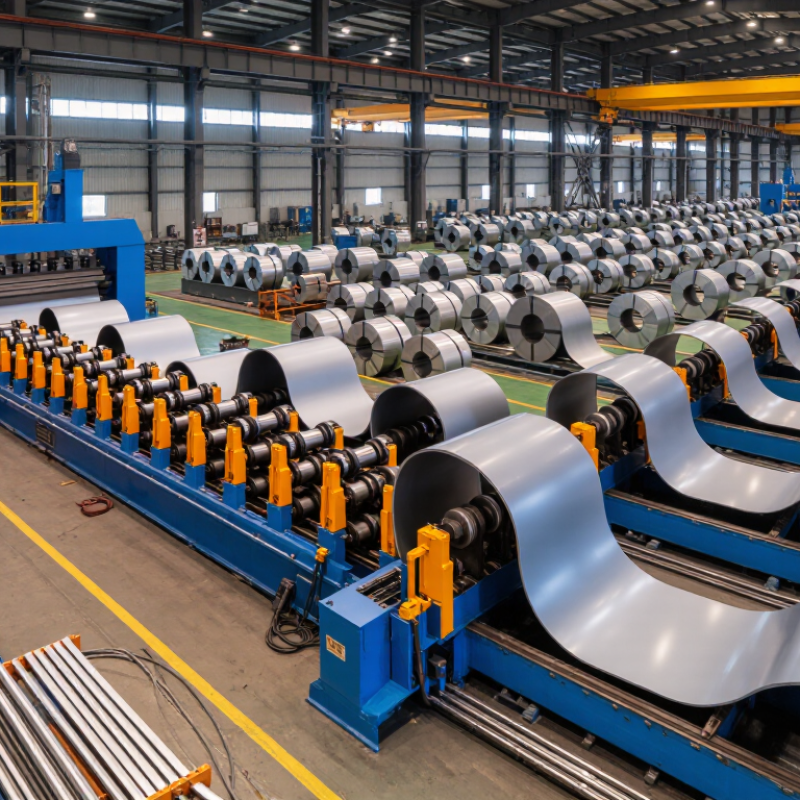
A U panel machine forms flat steel coils into U-shaped structural panels. These panels often support walls, roofs, partitions, and light industrial buildings. The machine usually includes a decoiler, guiding rollers, forming stations, a cutting unit, and a control system. Each section performs a specific task.

The coil begins on the decoiler. Rollers then guide it through several forming stations. Each station bends the steel gradually, reducing surface stress and shape errors. The cutting unit produces panels at programmed lengths. Sensors monitor movement, while the control system coordinates speed and cutting accuracy. Small adjustments matter.

In practical production, operators must check coil width, thickness, and coating quality before forming. Incorrect settings may create twisted edges or uneven joints. A level installation surface also improves stability and measurement accuracy. Regularly cleaning rollers helps prevent scratches on coated steel. Maintenance records should include lubrication, fastener checks, and electrical inspections.

The machine is not completely automatic in every situation. Material changes, temperature shifts, and operator judgment can affect results. This is easy to underestimate. A reliable supplier should provide clear technical specifications, installation guidance, training, and responsive after-sales support. Buyers should also verify production capacity, panel dimensions, forming speed, and applicable safety standards before choosing equipment.

Key Features of U Panel Machines Made in China

China Best U Panel Machine Manufacturer and Supplier?

Key Features of U Panel Machines Made in China

U panel machines made in China are designed for steady, repeatable sheet forming. They commonly process galvanized steel, coated steel, and aluminum coils. A guided decoiler keeps the coil centered during production. This small detail can reduce edge damage and uneven feeding.

The forming rollers shape the panel gradually, preventing sharp stress marks. Many machines support adjustable panel widths and thickness settings.

A PLC control system manages speed, length, and automatic cutting. Hydraulic or flying saw cutters can produce clean panel ends.

Operators still need practical training. Incorrect roller alignment may create visible waves in the finished panel.

A strong frame helps control vibration during long production runs. Protective covers improve workplace safety around moving components. Reliable suppliers should provide trial production, dimensional inspection, and electrical testing. Ask for measured samples, not only catalog photographs.

Clear manuals and spare roller information also improve maintenance planning. In my experience, accessible service support matters when a sensor fails unexpectedly.

No machine is perfect. Buyers should check coil tolerance, power requirements, installation space, and local safety standards before ordering. A carefully tested U panel line can deliver consistent profiles, but its performance depends on setup, material quality, and regular maintenance.

How to Evaluate Chinese U Panel Machine Manufacturers

China Best U Panel Machine Manufacturer and Supplier?

How to Evaluate Chinese U Panel Machine Manufacturers

Choosing a Chinese U panel machine requires more than comparing prices. The World Steel Association reported that China produced about 1,005 million tonnes of crude steel in 2024. This scale supports a mature supply chain, but it does not guarantee consistent machine quality. Ask for verified production records, material certificates, and dimensional reports from recent projects. A reliable manufacturer should explain roll-forming speed, panel tolerance, motor capacity, and changeover time in clear terms.

Inspect the machine virtually and physically when possible. Check frame welding, roller alignment, electrical protection, and control-system documentation. Request a video showing your specified steel width and thickness. Better still, arrange a factory acceptance test using your own drawings. ISO 9001 certification can indicate process control, yet certification alone proves little about maintenance or after-sales response. I have seen impressive brochures hide weak commissioning plans. That risk deserves attention.

Tips: Compare at least three technical quotations, not only final prices. Ask for spare-parts lists, warranty conditions, installation hours, and response times. Confirm whether the supplier can provide English manuals and operator training. Calculate total ownership cost, including tooling replacement and downtime. Do not trust vague claims such as “high precision.” Demand measured tolerances. A small trial order may reveal more than a long sales presentation.

China Best U Panel Machine Manufacturer and Supplier? - How to Evaluate Chinese U Panel Machine Manufacturers

Evaluation Dimension Weight What to Evaluate Practical Verification Method Reasonable Reference Benchmark Score
(1–5)
Product Specification Fit 15% Compatibility with the required U panel width, height, thickness, material type, forming profile, and finished-panel length. Send approved drawings and material specifications before quotation. Confirm the number of forming stations, shaft arrangement, guide design, and cutting position. The proposed machine should cover the buyer’s specified dimensions without relying on unapproved design changes. 1–5
Forming Accuracy 15% Dimensional consistency, profile symmetry, straightness, surface condition, and repeatability during continuous production. Request test-production measurements using the buyer’s material. Check profile dimensions, diagonal consistency, edge alignment, and visible scratches. Acceptance limits should be defined in the purchase contract and verified with signed inspection records rather than described only as “high precision.” 1–5
Material and Mechanical Construction 12% Roller material and treatment, shaft strength, frame rigidity, bearing quality, gearbox selection, and protection against corrosion. Review material certificates, heat-treatment records where applicable, component drawings, shaft dimensions, frame thickness, and bearing or gearbox specifications. Critical load-bearing and forming components should have traceable specifications and be suitable for the stated strip thickness and production duty. 1–5
Electrical and Control System 10% PLC and touchscreen functions, encoder feedback, emergency stops, overload protection, safety interlocks, and compatibility with the destination country’s power supply. Confirm voltage, frequency, phase, control-panel layout, wiring diagrams, alarm functions, spare-input capacity, and availability of English operating documentation. The machine should include documented safety circuits, clear alarms, parameter backup, and electrical components that can be serviced in the destination market. 1–5
Production Capacity 10% Line speed, usable output, changeover time, material-loading method, and cutting-cycle performance under actual operating conditions. Compare claimed speed with a witnessed factory test. Record line speed, stoppage time, material thickness, finished length, and the number of acceptable panels produced. Capacity should be stated as usable output with the specified material and profile, not only as the maximum no-load forming speed. 1–5
Quality Assurance and Testing 10% Documented inspection procedures covering incoming materials, machining, assembly, wiring, trial production, and final acceptance. Ask for inspection checklists, calibration records, test reports, factory acceptance procedures, and a written list of acceptance criteria. A reliable supplier should provide measurable FAT results and correct documented deviations before shipment. 1–5
Customization Capability 8% Ability to adapt the machine to different U panel profiles, punching requirements, cut-to-length settings, decoiling arrangements, and downstream equipment. Review similar engineering drawings, modification boundaries, tooling-change procedures, and the effect of customization on delivery time and warranty. All customized functions should be listed in the technical proposal and included in the final acceptance test. 1–5
After-Sales Service 8% Installation support, commissioning, operator training, troubleshooting response, remote assistance, and availability of replacement parts. Obtain the service process, response-time commitment, training scope, spare-parts list, warranty terms, and escalation contacts in writing. The contract should clearly define warranty duration, exclusions, service response, remote support, and the procedure for resolving quality claims. 1–5
Delivery and Documentation 5% Manufacturing schedule, packaging, shipping preparation, installation drawings, electrical diagrams, maintenance instructions, and spare-parts documentation. Request a milestone schedule and document index. Confirm that manuals, drawings, packing lists, and commissioning requirements are supplied before shipment. The delivery plan should include manufacturing, testing, packing, shipment preparation, and document handover milestones. 1–5
Total Cost of Ownership 7% Purchase price, tooling, freight-related requirements, installation, electricity consumption, maintenance, consumables, and spare-parts cost. Compare itemized quotations on the same technical basis. Include tooling, packaging, commissioning, training, spare parts, and long-term maintenance costs. The lowest initial quotation should not be selected without comparing specification compliance, service coverage, operating cost, and warranty risk. 1–5
Weighted Evaluation Result: Multiply each score by its weight, then add the results. Use documented evidence for every score. / 5.00

Quality Standards and Customization Options to Consider

When choosing a China U panel machine manufacturer and supplier, quality evidence matters more than polished claims. ISO 9001 certification can indicate controlled processes, but it does not prove machine performance. Ask for material certificates, welding inspection records, electrical safety checks, and a documented factory acceptance test. ISO 12100 supports machinery risk assessment, while IEC 60204-1 addresses electrical equipment safety. These standards create a stronger basis for comparison.

Performance also depends on the finished panel. EN 14509 covers factory-made insulated sandwich panels, including thermal and mechanical performance. The International Energy Agency reported that buildings used about 30% of global final energy in 2022. Better insulation can therefore support lower operational demand, although machine accuracy alone cannot guarantee building efficiency. Core density, joint design, thickness, and installation quality remain critical.

Customization should be practical. Confirm working width, panel thickness, line speed, roller material, cutting tolerance, control-system language, and available spare parts. A reliable supplier should provide trial production using your actual coil and insulation materials. Small deviations can affect joint fit. That detail is easy to miss.

I would also question unusually high speed claims. Faster is not always better. Request dimensional reports, noise data, maintenance intervals, and references from comparable production lines. A perfect specification rarely exists; the sensible choice is a traceable machine that matches your real output, workforce, and building standards.

How to Choose the Right U Panel Machine Supplier in China

China Best U Panel Machine Manufacturer and Supplier?

How to Choose the Right U Panel Machine Supplier in China

Choosing a U panel machine supplier requires more than comparing prices. Check whether the manufacturer understands your panel profile, material thickness, width, and production volume. Ask for a live factory test using your preferred steel coil. See the machine run. Observe feeding stability, forming accuracy, cutting performance, and surface protection. A reliable supplier should provide measured samples, not only attractive catalog photographs.

Review the machine structure carefully. Confirm the frame material, roller quality, drive system, control components, and emergency safety features. Request drawings, installation instructions, electrical diagrams, and a clear spare-parts list. Experienced suppliers can explain expected tolerances and maintenance intervals in practical terms. They should also describe remote support and onsite service without making unrealistic promises. Check export records, technical certificates, customer references, and factory inspection options. That matters.

Do not guess. Ask how the supplier handles profile changes, damaged rollers, software faults, and delayed replacement parts. A lower quotation may exclude commissioning, packaging, or training. We have seen buyers focus on speed while overlooking alignment and long-term maintenance. That decision can become expensive. Before signing, compare the full delivered cost, warranty terms, payment protection, and acceptance standards. If the supplier avoids detailed answers, treat that as useful evidence.

Request a Quote

For more information on our instruments, consumables, or services, or to request a quote, complete the contact form below, and one of our associates will reach out to you!

Request a Service Quote

To request service on your machine(s), complete the contact form below, and one of our associates will reach out to you!

Browse by:

  • Test Property
  • Manufacturer