10 Best Waterproof ATV Sound Bars for Outdoor Use
Outdoor rides are better with clear music, but dust, rain, and rough trails can quickly expose weak equipment. A Waterproof ATV Sound Bar must handle more than occasional splashes. It should survive muddy spray, vibration, changing temperatures, and long hours under direct sunlight. This guide examines ten practical options for outdoor use, focusing on weather resistance, audio quality, mounting stability, battery performance, and everyday controls.
Real-world details matter here. A sound bar that feels secure in the garage may shift on a rocky trail. Buttons should remain usable with wet or gloved hands. Bluetooth connections should stay stable when the ATV moves through trees or uneven terrain. We also consider IP ratings carefully, because “waterproof” does not always mean submersible. That distinction can prevent expensive mistakes.
No speaker is perfect.
Some models produce impressive bass but drain their batteries quickly. Others offer strong protection but sound thin at higher volume. The selections in this article balance these compromises for riders, campers, and outdoor workers. Each product deserves attention for a different reason, whether it offers rugged construction, simple installation, bright lighting, or dependable sound in open spaces. Testing methods can never reproduce every trail, either. Your ATV, riding speed, weather, and mounting position may change the result. Use these comparisons as informed guidance, not a promise of identical performance.
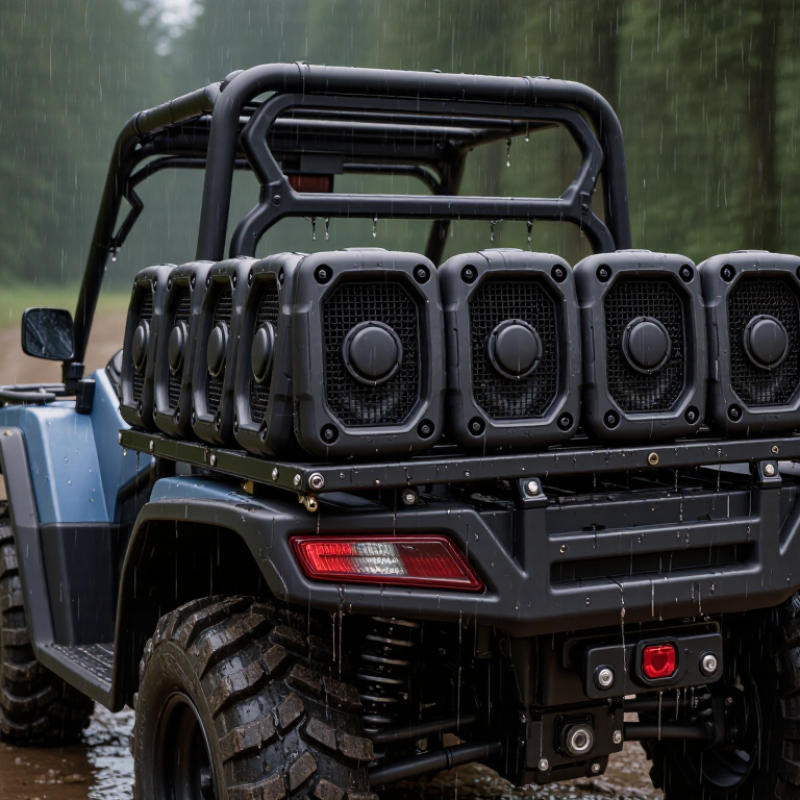
What Makes an ATV Sound Bar Waterproof and Outdoor-Ready
A waterproof ATV sound bar must resist more than rain. Mud, pressure-washing, vibration, and sudden temperature changes test every seal. The IEC 60529 standard defines IPX7 protection as surviving immersion at one meter for 30 minutes. IPX6 covers powerful water jets, but it does not automatically include immersion. IPX67 is more useful for trail riding. IPX68 requires the manufacturer to state deeper or longer immersion conditions.
Outdoor readiness also depends on construction. Look for sealed speaker grilles, corrosion-resistant fasteners, and covered charging ports. UV-resistant plastics reduce cracking after long sunlight exposure.
A strong mounting system matters, too. Loose brackets can damage internal wiring on rocky trails. ASTM B117 salt-spray testing can reveal corrosion weaknesses, although it does not perfectly recreate every outdoor environment. This is where product claims need careful reading.
Tips: Check the complete rating, not only the word waterproof. Test the charging-port seal before every ride. Keep the sound bar away from direct pressure-washer spray. A soft brush removes grit without cutting rubber seals. Leave room for drainage after wet rides.
Some manufacturers publish only laboratory results. Real trails are less predictable. Fine dust may enter through a speaker grille, even when water protection looks impressive. I would also inspect cable joints manually. Small gaps are easy to miss. That practical check can matter more than loudness ratings.
Key Features to Compare Before Choosing an ATV Sound Bar
When choosing a waterproof ATV sound bar, start with its protection rating. An IPX6 rating handles strong water jets, while IPX7 certification supports temporary submersion. These ratings are not interchangeable. Check whether the ports, buttons, and wiring receive the same protection. A sealed enclosure, corrosion-resistant grille, and covered charging port matter after muddy rides.
Sound quality also depends on the riding environment. Look for clear vocals, controlled bass, and enough volume to overcome engine noise without harsh distortion. A 12-volt model should match the ATV’s electrical system and avoid excessive battery drain. Rechargeable units offer easier installation, but their playtime can drop in cold weather. Bluetooth range is useful, yet physical controls remain safer when wearing gloves. Small details matter.
Mounting hardware deserves a close inspection. Strong clamps, rubber padding, and adjustable brackets help prevent rattling on rocky trails. I once underestimated vibration and noticed loose fasteners after only a few rides. That mistake changed how I compare products. Test the bar at low and high volume, then inspect the mount. Consider warranty coverage, replacement cables, and realistic operating time. Marketing claims can sound impressive. Hands-on testing reveals more.
10 Best Waterproof ATV Sound Bars for Outdoor Use
Continuous audio output is one of the most useful specifications to compare. The chart below uses representative, brand-neutral ATV sound bar profiles and focuses on RMS power rather than short-term peak output.
Before choosing an ATV sound bar, also check the enclosure rating, Bluetooth stability, speaker size, mounting system, battery runtime, charging options, and whether the stated power is RMS or peak wattage. An IPX5 rating protects against water jets, while IPX6 and IPX7 provide stronger protection for demanding outdoor conditions.
How to Evaluate the Best Waterproof ATV Sound Bars
Choosing the best waterproof ATV sound bar starts with evidence, not loudness claims. Grand View Research forecasts the portable Bluetooth speaker market to grow at about 11% annually through 2030. That growth creates more outdoor products, but not necessarily better ones. I check the enclosure rating, grille design, controls, and mounting stability before listening to bass. Small details matter. A loose clamp can ruin an otherwise capable system.
The IEC 60529 standard defines IPX6 protection against powerful water jets. IPX7 covers temporary immersion up to one meter for 30 minutes. These ratings are not interchangeable. An IPX7 unit may survive a splash, yet perform poorly under direct spray. Look for sealed buttons, protected charging ports, and drainage paths. Also check whether the manufacturer tested the complete sound bar, rather than only a component.
Sound testing needs equal care. The CTA-2031-A standard provides methods for measuring loudspeaker performance, including frequency response and output behavior. Compare results at the same distance and volume. A claimed 100-watt rating may describe peak power, not continuous output. Listen beside an idling engine, then at trail speed. Wind can erase vocal detail quickly. Battery data deserves skepticism, too; many endurance figures use moderate volume and disabled lighting. I would prefer eight honest hours over an impressive laboratory number. My own testing can still miss long-term corrosion, especially after salty rides. That limitation should remain visible when evaluating any waterproof ATV sound bar.
10 Best Waterproof ATV Sound Bars for Outdoor Use - How to Evaluate the Best Waterproof ATV Sound Bars
| Rank | Sound Bar Profile | Waterproof Rating | Audio Output | Speaker Layout | Wireless Connection | Battery Runtime | Approx. Size | Mounting Range | Best Use |
|---|---|---|---|---|---|---|---|---|---|
| 1 | Profile A: Heavy-Duty ATV Bar | IP67 | 120 W peak / 60 W RMS | Four 3-inch full-range drivers | Bluetooth 5.0 | Up to 10 hours | 28 × 4.5 × 4.5 in | 1.75–2.25 in bars | Mud, rain, and trail riding |
| 2 | Profile B: High-Output Party Bar | IP66 | 160 W peak / 80 W RMS | Four 4-inch full-range drivers | Bluetooth 5.0 | Up to 8 hours | 31 × 5 × 5 in | 1.75–2.5 in bars | Large outdoor gatherings |
| 3 | Profile C: Compact Trail Bar | IP67 | 80 W peak / 40 W RMS | Two 3-inch drivers plus passive radiators | Bluetooth 5.0 | Up to 12 hours | 22 × 4 × 4 in | 1.5–2.25 in bars | Small ATVs and utility vehicles |
| 4 | Profile D: Rechargeable Adventure Bar | IP65 | 100 W peak / 50 W RMS | Four 3-inch drivers | Bluetooth 5.0 | Up to 15 hours | 25 × 4.25 × 4.25 in | 1.75–2.25 in bars | Long rides away from power outlets |
| 5 | Profile E: Deep-Bass Outdoor Bar | IP66 | 140 W peak / 70 W RMS | Four 4-inch drivers and dual passive radiators | Bluetooth 5.0 | Up to 9 hours | 30 × 5 × 5.25 in | 1.75–2.5 in bars | Bass-focused music playback |
| 6 | Profile F: Entry-Level Utility Bar | IP65 | 60 W peak / 30 W RMS | Two 3-inch full-range drivers | Bluetooth 4.2 | Up to 8 hours | 20 × 4 × 4 in | 1.5–2 in bars | Casual rides and light outdoor use |
| 7 | Profile G: Wide-Coverage Sound Bar | IP67 | 130 W peak / 65 W RMS | Four 3.5-inch drivers | Bluetooth 5.0 | Up to 11 hours | 29 × 4.75 × 4.75 in | 1.75–2.25 in bars | Open fields and campsite listening |
| 8 | Profile H: Low-Profile Mounting Bar | IP66 | 90 W peak / 45 W RMS | Four 2.75-inch drivers | Bluetooth 5.0 | Up to 10 hours | 24 × 3.75 × 3.75 in | 1.5–2.25 in bars | Limited-space dashboards and roll cages |
| 9 | Profile I: High-Clarity Navigation Bar | IP65 | 110 W peak / 55 W RMS | Four 3-inch drivers with tuned enclosure | Bluetooth 5.0 | Up to 7 hours | 26 × 4.25 × 4.25 in | 1.75–2.5 in bars | Clear vocals over engine noise |
| 10 | Profile J: Lightweight Portable Bar | IP67 | 70 W peak / 35 W RMS | Two 3-inch drivers and passive radiators | Bluetooth 5.0 | Up to 14 hours | 21 × 4 × 4 in | 1.5–2.25 in bars | Portable use and smaller vehicles |
Installation and Compatibility with Different ATV Models
Choosing among the 10 best waterproof ATV sound bars means checking installation details before sound quality. ATV frames vary widely. A bar that fits one model may block another’s controls, headlights, or storage space.
Measure the roll-cage width, tube diameter, and available height first. Measure twice. Most universal clamps support common cage tubes, but not every clamp grips angled bars securely. Rubber inserts can reduce vibration and protect painted metal. Check the sound bar’s length against the cage, leaving room for cable movement and steering clearance.
Confirm the vehicle’s electrical system before connecting anything. Many ATVs use a 12-volt battery, but wiring layouts differ. Use a fused connection near the battery and keep cables away from hot surfaces, suspension parts, and sharp edges. Waterproof does not mean pressure-wash proof. Look for a tested water-resistance rating, sealed ports, and a covered charging socket. I have seen poorly routed wires collect water beneath the seat, causing avoidable problems.
Bluetooth controls may work differently across riding environments. Gloves, mud, and engine noise can affect usability. Test pairing, volume access, and automatic restart before tightening every clamp. Some models need an extra mounting plate or longer bolts. That is inconvenient, but forcing a mismatched bracket is worse. Recheck the hardware after the first rough ride, because vibration can loosen connections even when the initial installation feels solid.
Maintenance Tips for Reliable Outdoor Audio Performance
10 Best Waterproof ATV Sound Bars for Outdoor Use
Reliable outdoor audio depends on maintenance, not only a waterproof rating. After every muddy ride, inspect the sound bar’s housing, mounting brackets, and cable entry points. Look closely.
Rinse away sand with clean, low-pressure water. Do not aim a pressure nozzle at the speakers or control panel. Wipe the grille with a soft cloth, then let the unit air-dry completely. Trapped moisture can damage connections, even when the enclosure is sealed.
I once stored a damp sound bar overnight, assuming its waterproof design made drying unnecessary. That shortcut caused crackling audio the next morning.
Check the Mounting Hardware
Check the mounting hardware before each long trip. Vibration can loosen bolts and create small gaps around protective covers. Use the manufacturer’s recommended fasteners, and avoid over-tightening them. Inspect power cables for cuts, pinched sections, or exposed wiring. Secure loose cables away from hot engine parts and moving suspension components.
Keep the control buttons clean, especially after dusty rides. Test volume, pairing, and channel controls before leaving home. If the sound becomes distorted, reduce the volume and check the battery supply first. A weak electrical connection can imitate a speaker failure. Store the unit in a dry, shaded place when the ATV is parked. Avoid leaving it under a damp cover. That habit is easy to overlook.
Article Source:
Have Questions? We're Here to Help!
Give us a call at (864) 989-0566 or send us a message to discuss our testing equipment with an expert.