Top Temperature Humidity Chambers for Global Buyers?
Choosing a temperature humidity chamber for global production is not a simple equipment purchase. It is a reliability decision.
Buyers must examine temperature range, humidity control, chamber volume, recovery speed, calibration records, and long-term service support. A compact 150-liter chamber may suit electronics testing, while automotive components often require larger interiors and stronger cycling performance. Door seals matter. So does water quality.
Dr. Masahiro Sato, an environmental testing specialist, has stated, “A chamber reveals product weaknesses that normal operation may hide.” This practical view guides our comparison of leading suppliers and models. A dependable chamber should maintain stable conditions, document test results, and support recognized methods such as IEC 60068 and ASTM standards. Regional voltage, software language, spare parts, and technician availability also deserve attention. These details can decide whether a chamber supports production or interrupts it.
Real laboratory experience adds another warning. A polished specification sheet does not guarantee accurate testing. Sensors drift. Humidity generators need cleaning. Installation errors can undermine excellent equipment. Buyers should request calibration evidence, mapping data, warranty terms, and service response times before signing an order.
Small details matter.
This guide compares temperature humidity chamber manufacturers for global buyers, focusing on measurable performance, practical ownership, and supplier credibility. It does not treat the highest cooling rate as the only advantage. Energy use, noise, maintenance access, safety controls, and operating software also influence total value. Some recommendations may remain imperfect because every laboratory has different products, standards, and budgets. That limitation deserves honest consideration.
What Are Temperature Humidity Chambers and How Do They Work?
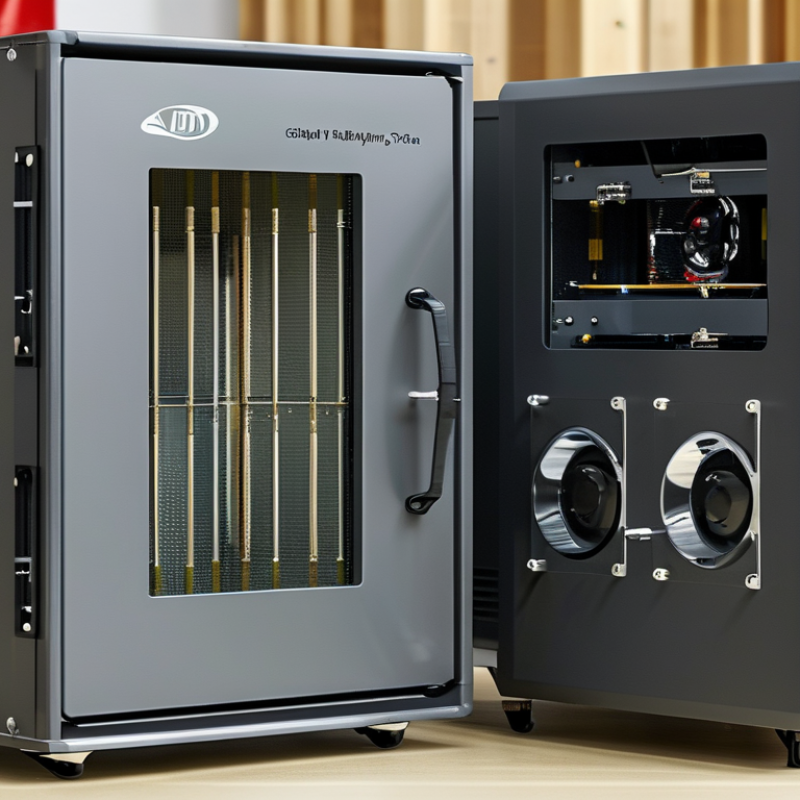
Temperature humidity chambers are enclosed test systems that recreate controlled environmental conditions. They expose products to changing heat and moisture levels. Engineers use them to examine materials, electronics, packaging, and components before shipment or field use. A chamber usually contains insulated walls, heating elements, cooling equipment, water circulation, sensors, and a programmable controller. It can simulate a warm, damp warehouse or a cold transport route.
The system works by measuring internal temperature and relative humidity continuously. The controller compares readings with the selected test profile. Heating, cooling, humidifying, and drying devices then adjust the chamber. For example, a test may hold 40°C and 90% relative humidity for 96 hours. Sensors must be calibrated because small errors can affect product conclusions. Airflow also matters. Uneven circulation may leave one corner warmer than another. That weakness is easy to overlook.
Tips: Define the test range before comparing equipment. Check temperature uniformity, humidity stability, chamber size, and recovery time after door opening. Request calibration records and service details from the supplier. Global buyers should also confirm voltage, safety certification, language support, and replacement-part availability. Do not choose by capacity alone. A larger chamber can consume more energy and may control humidity less efficiently when lightly loaded. No chamber is perfect. Even a well-designed test can mislead if the product layout does not reflect real use.
Which Chamber Specifications Matter for Global Buyers?
Top Temperature Humidity Chambers for Global Buyers?
Which Chamber Specifications Matter for Global Buyers?
Global buyers should judge a temperature humidity chamber by test needs, not impressive-looking numbers. A range from -70°C to 180°C may be unnecessary for electronics or packaging tests. Stability and uniformity often matter more. For example, a chamber holding 85°C and 85% relative humidity should maintain both conditions without noticeable drift. Ask for measured performance, not only advertised limits.
Chamber volume affects real testing more than many purchasing teams expect. A crowded interior can restrict airflow and create uneven results. Leave space around products, sensors, and cable routes. Check the usable working area, shelf load, ramp rate, noise level, and maximum sample weight. A fast temperature change sounds useful, but it may increase overshoot and stress delicate samples. Faster is not always better.
Reliable operation also depends on calibration and data control. Request calibration records, sensor accuracy, humidity control details, alarm functions, and automatic shutdown protection. Data logging should show time, temperature, humidity, and test events clearly. Local power requirements, operating frequency, door size, delivery conditions, and service response deserve equal attention. I have seen buyers compare price before checking voltage compatibility. That mistake can delay installation. A wider specification sheet is not automatically a better chamber. The right choice leaves enough capacity for future tests without paying for unused performance.
Top Temperature Humidity Chambers for Global Buyers? - Which Chamber Specifications Matter for Global Buyers?
| Specification | Entry-Level Range | General-Purpose Range | High-Performance Range | Why It Matters for Global Buyers |
|---|---|---|---|---|
| Temperature Range | Approximately -10°C to +100°C | Approximately -40°C to +150°C | Approximately -70°C to +180°C | The required range should cover the product's specified operating, storage, and qualification conditions with sufficient margin. |
| Relative Humidity Range | Typically 20% to 95% RH | Typically 10% to 98% RH | Typically 10% to 98% RH, subject to dew-point limitations | Humidity performance depends on temperature; the chamber should state the allowable humidity envelope rather than RH alone. |
| Internal Volume | Approximately 50–150 L | Approximately 200–1,000 L | Approximately 1,000 L and above | Select usable working space based on product size, fixture clearance, airflow, and future test capacity—not just external dimensions. |
| Temperature Stability | About ±0.5°C to ±1.0°C | About ±0.3°C to ±0.5°C | About ±0.1°C to ±0.3°C | Stability describes fluctuation at a location over time and is important for repeatable, comparable test results. |
| Temperature Uniformity | About ±1.5°C to ±2.5°C | About ±1.0°C to ±2.0°C | About ±0.5°C to ±1.0°C | Uniformity indicates temperature differences between locations and helps determine suitable product placement and loading. |
| Humidity Stability | About ±3% to ±5% RH | About ±2% to ±3% RH | About ±1% to ±2% RH | Low humidity fluctuation is important for moisture-sensitive materials, packaging, electronics, and accelerated aging tests. |
| Temperature Recovery | Approximately 5–15 minutes after a brief door opening | Approximately 3–10 minutes | Approximately 2–8 minutes | Faster recovery can improve throughput, but actual performance depends on load, set point, door-open time, and ambient conditions. |
| Heating Rate | Approximately 1–3°C/min | Approximately 2–5°C/min | Approximately 3–10°C/min or higher | Heating rate affects cycle time and should be evaluated together with sample mass, power supply, and test profile. |
| Cooling Rate | Approximately 0.5–1.5°C/min | Approximately 1–3°C/min | Approximately 3–10°C/min or higher | Cooling performance is influenced by refrigerant system design, ambient temperature, load, and whether a single- or two-stage system is used. |
| Control Resolution | Typically 0.1°C and 1% RH | Typically 0.1°C and 0.1–1% RH | Typically 0.1°C and 0.1% RH | Display resolution is not the same as measurement accuracy; buyers should request calibration and sensor specifications separately. |
| Programmable Profiles | Basic step and timer programs | Multi-step profiles with alarms and data logging | Complex profiles, ramp control, event inputs, and remote monitoring | Advanced programming reduces operator intervention and supports repeatable testing across international facilities. |
| Data Recording | USB or local memory, depending on configuration | Local storage, USB export, and software connection | Network connectivity, audit trails, remote access, and extended data storage | Traceable records support quality systems, troubleshooting, regulatory reviews, and multi-site test comparison. |
| Calibration Capability | Factory verification or basic calibration documentation | Traceable temperature and humidity calibration options | Multi-point mapping, accredited calibration options, and documented uncertainty | Calibration evidence helps demonstrate that measured conditions are reliable and suitable for controlled testing. |
| Common Test Standards | Applicable sections of IEC 60068 or equivalent methods | IEC 60068, ASTM environmental testing methods, and sector-specific procedures | Customer-defined validation protocols plus applicable international and sector standards | Standards define test methods and acceptance criteria; chamber compliance should be confirmed for the intended application. |
| Electrical Supply | Single-phase, commonly 100–240 V, depending on model | Single- or three-phase, commonly 200–480 V | Three-phase configurations commonly required for large or rapid-change systems | Voltage, frequency, phase, plug type, and installation requirements must match the destination country. |
| Safety Features | Over-temperature protection and door alarm | Independent temperature limiter, alarms, and circuit protection | Redundant limiters, emergency stop, fault logging, and optional sample protection | Safety systems protect personnel, test articles, and facilities during long or unattended test cycles. |
| Environmental and Installation Conditions | Controlled indoor area; moderate ambient temperature | Ventilation, clearance, drainage, and stable ambient conditions required | Dedicated utilities, heat rejection, floor loading, ventilation, and service access may be required | Installation conditions directly affect performance, energy use, maintenance access, and commissioning time. |
| Typical Best Fit | Small components, basic screening, education, and limited-volume testing | Routine qualification, reliability testing, packaging, electronics, and materials | Automotive, aerospace, battery, pharmaceutical, and high-throughput qualification programs | Matching chamber capability to the test workload avoids paying for unnecessary performance or facing costly upgrades later. |
Note: The values shown are representative specification ranges for temperature and humidity chambers. Actual performance varies with chamber size, loading, ambient conditions, test method, and configuration; buyers should verify certified specifications before purchase.
How to Compare Chamber Types, Sizes, and Environmental Controls?
Top Temperature Humidity Chambers for Global Buyers?
How to Compare Chamber Types, Sizes, and Environmental Controls?
Choose the chamber type from the test, not the product brochure. Temperature-only chambers suit thermal cycling and storage studies. Temperature-humidity chambers support electronics, packaging, corrosion, and material testing. For large assemblies, walk-in chambers provide access and flexible loading. Bench-top units usually offer better control for smaller samples. Fit matters.
Market data supports careful investment. MarketsandMarkets’ 2024 Environmental Test Chamber report estimates the market will grow from about USD 1.1 billion in 2023 to USD 1.5 billion by 2028. Fortune Business Insights projects over 6% annual growth through 2030. These figures suggest rising demand, but they do not prove that a larger chamber is better. A chamber filled too heavily may recover slowly and create uneven conditions. Leave practical airflow space around samples. My own comparison would measure usable volume, not just the advertised volume.
Check temperature range, humidity range, ramp rate, recovery time, uniformity, and sensor placement. IEC 60068-3-5 and IEC 60068-3-6 provide useful methods for temperature and humidity testing. ISO/IEC 17025 also supports traceable calibration practices. Ask for mapping data at empty and loaded conditions. Request noise, power, water quality, and heat-rejection requirements. Global buyers should verify local voltage, service coverage, spare-part access, and software language. Data logging is valuable, but weak audit trails can still undermine reliable results. A glossy specification sheet is never enough.
Top Temperature and Humidity Chambers for Global Buyers
How chamber types compare by typical temperature envelope and environmental-control capability
The chart uses representative non-brand market ranges. Temperature-only chambers typically provide the widest temperature span, while temperature-and-humidity chambers add controlled relative humidity, commonly around 10–98% RH. Thermal-shock chambers prioritize rapid transfer between hot and cold zones and generally do not provide humidity control. Actual limits depend on chamber size, test load, ramp rate, and supplier specifications.
What Certifications and Safety Standards Should Buyers Check?
For global buyers, temperature humidity chambers should be judged by safety evidence, not appearance alone. Ask for certification documents matching the exact model and electrical configuration. IEC 61010-1 is a useful reference for laboratory equipment safety. It covers hazards such as electric shock, overheating, and unexpected operation. Local approval may also require CE, UKCA, UL, or equivalent markings. Requirements depend on the destination country.
Check the chamber’s electromagnetic compatibility test results, often linked to IEC 61326-1. Poor EMC performance can disturb nearby instruments or produce unreliable readings. Request calibration records with traceability to an ISO/IEC 17025 accredited laboratory. The report should show temperature and humidity points, tolerances, uncertainty, and the calibration date. A generic factory certificate is not enough.
Safety features deserve a physical review. Confirm independent over-temperature protection, door release design, circuit breakers, leakage protection, and compressor safeguards. Ask whether alarms remain visible after a power failure. Inspect wiring labels, insulation, and emergency stop access during a factory acceptance test. Refrigerant documentation should identify the refrigerant, pressure controls, and service precautions. A certificate can still hide practical weaknesses. I would not rely on a logo alone. Standards may be current, incomplete, or misunderstood. Buyers should verify certificate numbers with the issuing body and confirm that installation, voltage, ventilation, and operator training match the stated safety conditions.
How to Evaluate Suppliers, Costs, Installation, and After-Sales Support?
Choosing a temperature humidity chamber starts with supplier evidence, not catalog promises.
Grand View Research’s 2024 assessment valued the environmental test chamber market at about USD 1.03 billion in 2023, with a projected 4.9% CAGR through 2030. That growth attracts new suppliers. I would request factory audit records, traceable calibration certificates, and recent customer references. Ask for uniformity data at your actual temperature and humidity setpoints. Brochure ranges can mislead.
Cost evaluation should include freight, installation, validation, energy, and downtime.
Obtain a five-year ownership estimate, not only the purchase price. The U.S. Department of Energy’s industrial efficiency guidance repeatedly identifies maintenance and operating energy as important lifecycle-cost factors. A larger chamber may consume more power, even when lightly loaded. Check compressor replacement terms, spare-part availability, and local service labor rates. Keep the quotation detailed.
Installation needs practical planning.
Confirm floor loading, door clearance, drainage, ventilation, electrical phase, and heat rejection before shipment. IEC 60068-3-5 and IEC 60068-3-6 provide useful principles for temperature and humidity testing, but site acceptance still requires measured performance. Require mapping with calibrated instruments and a written acceptance protocol. After-sales support should specify response times, remote diagnosis, emergency visits, and annual calibration options. In my experience, unclear service language becomes expensive later. I may still overestimate predicted energy use; real loading, ambient heat, and test cycles can change it. That uncertainty deserves a contingency allowance.
Related Posts
-
Why is a Test Chamber Essential for Quality Control in Product Development
-
What Is a Thermal Test Chamber?
-
How to Choose the Right Thermal Test Chamber for Your Needs?
-
How to Choose the Right Temperature Humidity Chamber for Your Specific Testing Needs
-
Exploring the Essential Role of Temperature and Humidity Chambers in Climate Simulation and Testing: A Deep Dive
-
Best Humidity Chamber Options for Global Buyers?
Have Questions? We're Here to Help!
Give us a call at (864) 989-0566 or send us a message to discuss our testing equipment with an expert.