2026 Best Tablet Counter Types for Global Buyers?

Choosing the best Tablet Counter in 2026 requires more than comparing prices or counting speeds. Global buyers must examine accuracy, material compatibility, cleaning access, software controls, and after-sales support. A machine that performs well with round tablets may struggle with softgels, caplets, or dusty products.

The details matter. Look at stainless-steel contact surfaces, sensor stability, hopper design, and reject handling. Check whether operators can adjust counting parameters without complicated tools. A clear touchscreen helps during a busy production shift. So does a removable counting channel. Small design choices often decide daily reliability.

Dr. Elena Marquez, a pharmaceutical equipment consultant, says, “The best Tablet Counter is not the fastest machine; it is the one that maintains accuracy when products, operators, and conditions change.” Her observation deserves careful attention. Buyers sometimes focus on advertised output while overlooking vibration, humidity, tablet shape, and cleaning time. That is an expensive mistake.

This guide compares electronic, automatic, semi-automatic, and high-speed Tablet Counter types for international purchasing teams. It considers production scale, container formats, validation needs, and maintenance expectations. It also reviews practical concerns, including voltage compatibility, documentation, spare parts, and remote technical assistance.

No single model suits every factory. That is the uncomfortable truth. A compact counter may fit a contract packer better than a larger industrial system. Conversely, growing manufacturers may outgrow entry-level equipment sooner than expected. The right decision begins with real product samples, measured production targets, and a realistic ownership budget.
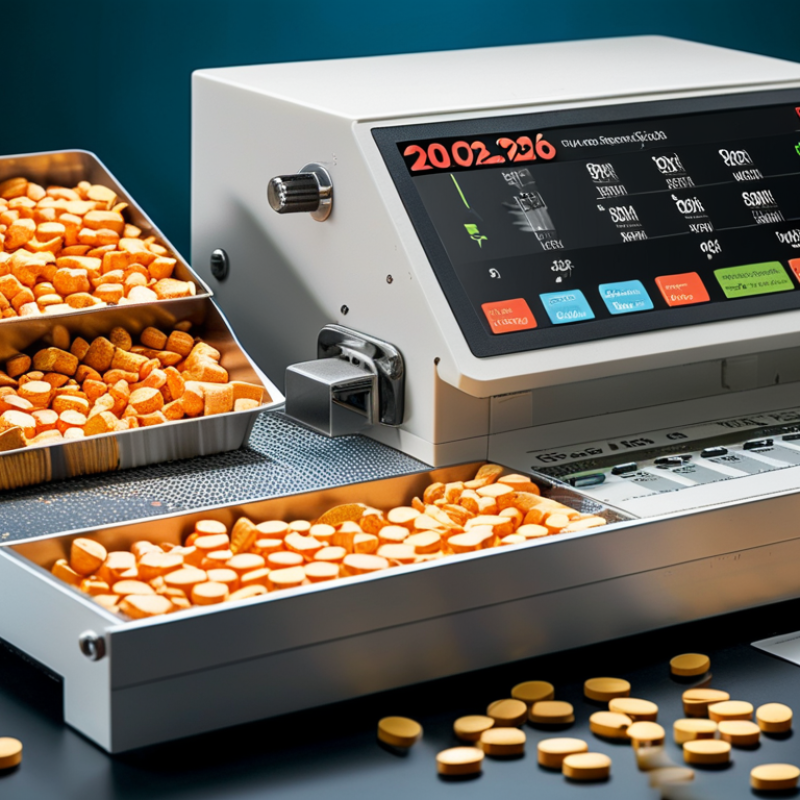
2026 Best Tablet Counter Types for Global Buyers?

Define Tablet Counter Types: Manual, Semi-Automatic, and Automatic Models

Tablet counters fall into three practical categories: manual, semi-automatic, and automatic models. Each suits a different production rhythm.

Manual counters use a counting tray, visual inspection, and hand-filled containers. They fit laboratories, clinics, and small batches. Output often stays below 20 bottles per hour, depending on operator skill and tablet shape. Simple is not careless. However, fatigue can create inconsistent counting, especially with similar-sized tablets. Buyers should check tray accuracy, cleaning access, and calibration records before purchase.

Semi-automatic counters combine a hopper, electronic counting sensors, and foot-pedal or timed dispensing. Operators still place and remove bottles, but counting becomes faster and more repeatable. Typical working rates may reach 20–60 bottles per minute under controlled conditions. Automatic counters integrate feeding, counting, filling, and rejection functions on a continuous line. Higher-speed systems can exceed 100 bottles per minute, but actual output depends on tablet size, dust, vibration, and container format. Speed needs control.

Grand View Research’s 2024 pharmaceutical packaging equipment analysis indicates roughly 6% annual market growth through 2030, reflecting continued investment in packaging efficiency. Yet automation is not automatically better. WHO’s global surveillance findings estimate that one in ten medical products in low- and middle-income countries may be substandard or falsified, making inspection and traceability essential. A practical selection should compare validation data, changeover time, sensor performance, and operator training. I would not choose the fastest machine first. A slower counter with stable accuracy may protect more batches, reduce waste, and simplify daily maintenance.

2026 Best Tablet Counter Types for Global Buyers

Manual, semi-automatic, and automatic tablet counters differ mainly in throughput, operator involvement, and counting consistency. The chart uses representative planning values for common non-brand equipment configurations; actual performance varies by tablet size, shape, feeding method, and machine setup.

Manual counters are suitable for small batches and flexible operations but require continuous operator handling. Semi-automatic models improve productivity while retaining manual loading or discharge steps. Automatic counters generally provide the highest throughput and the most consistent counting performance for larger production volumes.

Compare Capacity Benchmarks: 30–100 Bottles/Min and ±0.5% Counting Accuracy

2026 Best Tablet Counter Types for Global Buyers?

For global buyers, output and counting accuracy should be evaluated together. A 30–100 bottles-per-minute range suits many small and medium tablet packaging lines. However, speed alone can hide unstable feeding, tablet damage, or missed counts. The target should be sustained performance, not a short demonstration.

PMMI’s Pharmaceutical and Medical Device Packaging Trends report highlights labor pressure, flexible equipment, and stronger inspection needs across packaging operations. These findings support choosing counters with recipe control, dust management, and automatic reject verification. In practical commissioning, a ±0.5% counting accuracy target requires consistent tablet shape, controlled vibration, and calibrated sensors. A 60-count bottle should repeatedly receive 60 tablets, even when the hopper level changes. Small details matter.

Not every product fits the benchmark.

Friable tablets may need slower acceleration and gentler contact surfaces. High-speed settings can increase dust and create false sensor signals. Buyers should request trial data using their actual tablet dimensions and packaging materials. The United States Pharmacopeia’s weight-variation and dosage-uniformity standards also remind teams that counting accuracy does not prove dose quality. This is an important limitation. A machine can count correctly while upstream compression remains inconsistent. Acceptance tests should record speed, error rate, rejected bottles, changeover time, and cleaning effort. Regional service coverage and spare-sensor availability deserve equal attention. Fancy specifications are not enough.

Evaluate Electronic Counters Against FDA 21 CFR Part 11 Data Requirements

For global buyers in 2026, tablet counter selection should begin with data integrity, not counting speed. Automatic counters suit high-volume production, while semi-automatic models offer flexibility for smaller batches. Manual verification may still help during changeovers. The machine type matters, but electronic records matter more.

FDA 21 CFR Part 11 applies when electronic records or signatures support regulated activities. A suitable counter should provide controlled user access, unique accounts, secure timestamps, and tamper-evident audit trails. It should record adjustments, rejected counts, recipe changes, and alarm events. Access should match job responsibilities. Shared passwords create avoidable risks.

Look closely at validation support. Does the supplier provide clear requirements, testing evidence, and operating procedures? Data should remain accurate, attributable, legible, contemporaneous, original, and complete.

Backup and recovery functions deserve a live test, not only a brochure statement. Check export formats and system compatibility before installation. Small details matter.

Do not trust the screen alone. A polished interface can still hide weak controls. Teams may overlook time synchronization or inactive user accounts. That is a real gap. Reviewers should test failed logins, edited settings, power loss, and audit-trail retrieval. No counter is automatically compliant. Compliance depends on intended use, configuration, validation, training, and continued oversight.

Match Multi-Channel Counters with GMP, USP, and Global Packaging Standards

2026 Best Tablet Counter Types for Global Buyers?

A multi-channel tablet counter should fit the process, not merely the sales brochure. Electronic counters suit high-volume pharmacy and hospital lines. Semi-automatic counters offer flexibility for smaller batches and frequent product changes. Manual systems may support sampling, but they need stronger operator controls. Small errors matter.

GMP requires documented cleaning, line clearance, calibration, and batch records. The counter should support recipe control, reject tracking, and audit trails. USP <905> guides dosage-unit uniformity, while USP <671> addresses packaging performance. These requirements connect counting accuracy with final container protection. PMMI’s 2024 pharmaceutical packaging trends report also highlights automation, inspection, and traceability as continuing investment priorities. Validation comes first.

Packaging choices must work across regional expectations. Consider blister packs, bottles, desiccants, tamper evidence, and child-resistant closures. ISO 15378 can support quality management for primary packaging materials. WHO’s Global Surveillance and Monitoring System report estimates that one in ten medical products in low- and middle-income countries is substandard or falsified. That statistic makes verification practical, not decorative. In my experience, buyers often overvalue speed and undervalue changeover control. That judgment can fail when products, pack sizes, or channels change quickly. A slower counter with reliable records may protect compliance better. The difficult part remains operator training.

Select the Best 2026 Tablet Counter by Scale, Compliance, and Total Cost

Choosing the best 2026 tablet counter starts with production scale, not the machine’s appearance. Small pharmacies and pilot facilities may need compact counters with simple controls and quick changeovers. High-volume manufacturers usually require faster counting, larger hoppers, continuous feeding, and stable performance across long shifts.

Measure twice. Scale matters.

Compliance should be evaluated through documented design and operating controls. Look for dust management, accessible contact parts, clear batch records, and repeatable counting accuracy. Materials should suit the working environment and allow thorough cleaning. Operators also need practical training, not only technical manuals. In my equipment evaluations, unclear cleaning steps often create more risk than limited machine speed. That detail is easy to miss.

Total cost includes more than the purchase price. Calculate installation, validation support, spare parts, calibration, energy use, labor, and downtime. A low-cost counter can become expensive when changeovers take twenty minutes longer each day. Conversely, an advanced system may be wasteful for a small operation. Request test runs using your actual tablet sizes, shapes, and production targets. Record speed, rejects, noise, cleaning time, and operator effort. Small details matter. Real results are more reliable than brochure figures, although even test conditions may not reflect every production challenge.

2026 Best Tablet Counter Types for Global Buyers? - Select the Best 2026 Tablet Counter by Scale, Compliance, and Total Cost

Tablet Counter Type Best Production Scale Typical Counting Rate Typical Count Accuracy Tablet Characteristics Compliance and Data Controls Typical Purchase Price (USD) Estimated 5-Year TCO (USD) Main Advantages Main Limitations Recommended Buyer
Manual or Visual Counting Tray Laboratory, clinical trial, pharmacy, and very low-volume operations Approximately 300–1,500 tablets/minute, depending on operator skill and tablet geometry Generally ±1 tablet per count when operated carefully; higher operator-related variation is possible Suitable for stable, non-sticky tablets that can be spread and visually separated Basic batch worksheets, equipment identification, cleaning records, and second-person verification are normally required for GMP use $100–$1,500 $8,000–$45,000, mainly driven by labor, verification, and error handling Lowest capital cost; simple operation; easy to clean; no complex software Labor-intensive; limited repeatability; weak audit trail; unsuitable for high-volume commercial packaging Small pharmacies, research units, pilot batches, and occasional counting tasks
Semi-Automatic Electronic Counter Small to medium pharmaceutical, nutraceutical, and contract packaging facilities Approximately 1,000–10,000 tablets/minute Typically 99.5%–99.9% under validated operating conditions Works with many standard round, oval, and capsule-shaped solid oral dosage forms; product changeover may require adjustment Digital count setting, password-protected parameters on some configurations, reject control, and electronic batch records may be available $8,000–$35,000 $25,000–$95,000, including maintenance, calibration, cleaning validation, and operator labor Good balance of cost, flexibility, and accuracy; lower labor requirement than manual counting Usually requires an operator to feed containers or manage filling; may have limited integration capability Growing manufacturers, pharmacies, and facilities with several products but moderate output
Automatic Optical Tablet Counter Medium-volume commercial packaging and multi-product production lines Approximately 10,000–60,000 tablets/minute, depending on the number of counting channels Typically 99.9% or better after product-specific setup and verification Suitable for a broad range of tablet sizes; transparent or highly reflective products may need lighting and sensor optimization Recipe management, user access levels, alarm history, electronic records, reject monitoring, and interface options for line integration $35,000–$120,000 $85,000–$300,000, including validation, software support, spare parts, calibration, and integration High repeatability; reduced labor; fast changeover options; suitable for controlled packaging environments Higher purchase price; requires qualified setup, cleaning procedures, and routine performance verification GMP-regulated manufacturers and contract packagers requiring reliable, documented counting
High-Speed Inline Tablet Counter Large-scale pharmaceutical and nutraceutical packaging lines operating multiple shifts Approximately 60,000–300,000 tablets/minute, depending on channel count, tablet size, and container format Typically 99.9%–99.99% when validated for the product and operated within approved parameters Best for consistent product dimensions and stable bulk feeding; difficult products may require dedicated tooling or controlled feeding PLC or supervisory control, electronic batch records, audit trails, line clearance support, automated reject handling, and data interfaces $120,000–$350,000 $300,000–$900,000, including line integration, qualification, utilities, service contracts, and planned downtime Maximum throughput; lower unit labor cost; strong integration with automated bottle filling and packaging systems High capital exposure; longer commissioning; greater dependence on maintenance, spare parts, and trained technicians High-volume plants where line utilization and labor productivity justify automation
Vision-Inspection Counting System Regulated production requiring enhanced product identification and counting verification Approximately 10,000–100,000 tablets/minute, depending on imaging configuration and inspection criteria Typically 99.9% or better for validated products; performance depends strongly on contrast, orientation, and tablet condition Can support tablets with printed markings, color differences, chips, cracks, or shape defects when the inspection package is configured accordingly Image records or event logs, recipe control, user permissions, reject confirmation, audit trails, and support for documented inspection procedures $80,000–$250,000 $220,000–$700,000, including software validation, camera maintenance, data storage, service, and line integration Combines counting with additional inspection; provides stronger evidence for quality investigations and batch review Most expensive and technically demanding option; imaging performance can be affected by dust, glare, and inconsistent product presentation Buyers prioritizing traceability, defect detection, and documented quality control over minimum capital cost
Cost and performance basis: The price and five-year total-cost ranges are planning estimates in 2026 USD for new equipment. They exclude taxes, import duties, building modifications, and major upstream or downstream packaging equipment. Actual performance must be confirmed through product-specific trials, factory acceptance testing, installation qualification, operational qualification, and performance qualification.
Compliance note: Compliance readiness is not the same as regulatory certification. For regulated operations, buyers should verify applicable GMP requirements, electronic-record and electronic-signature controls such as 21 CFR Part 11 or EU GMP Annex 11, data-integrity procedures, audit-trail behavior, calibration controls, cleaning validation, and supplier qualification before purchase.

Request a Quote

For more information on our instruments, consumables, or services, or to request a quote, complete the contact form below, and one of our associates will reach out to you!

Request a Service Quote

To request service on your machine(s), complete the contact form below, and one of our associates will reach out to you!

Browse by:

  • Test Property
  • Manufacturer