What Are Adhesive Nose Strips and How Do They Work?
Adhesive Nose Strips are small, flexible bands placed across the outside of the nose. They use gentle spring-like tension to lift the skin beside the nostrils. This action may widen the nasal valve area, where airflow can feel restricted during sleep, exercise, or congestion. They do not enter the nose. They are not medication.
Dr. Steven Y. Park, an otolaryngologist and sleep-breathing specialist, explains the practical purpose clearly: “Nasal breathing is often the missing piece in better sleep.” His observation reflects an important distinction. Adhesive Nose Strips may support airflow, but they cannot remove swollen tissue, correct a deviated septum, or treat sleep apnea. Their effect can also vary with facial shape, skin sensitivity, and how firmly the strip is applied.
Picture the strip lifting the sides of the nose slightly, like opening a narrow window. Some users notice easier breathing within minutes. Others notice little change. That difference matters. A strip that feels helpful during a workout may not solve nighttime obstruction. Skin redness, itching, or discomfort can also occur, especially after removal.
The best results usually come from clean, dry skin and careful placement. Do not apply a strip over broken or irritated skin. If loud snoring, choking during sleep, or persistent nasal blockage continues, professional evaluation is more appropriate than repeated self-testing. Adhesive Nose Strips can be useful tools. They are not complete solutions.
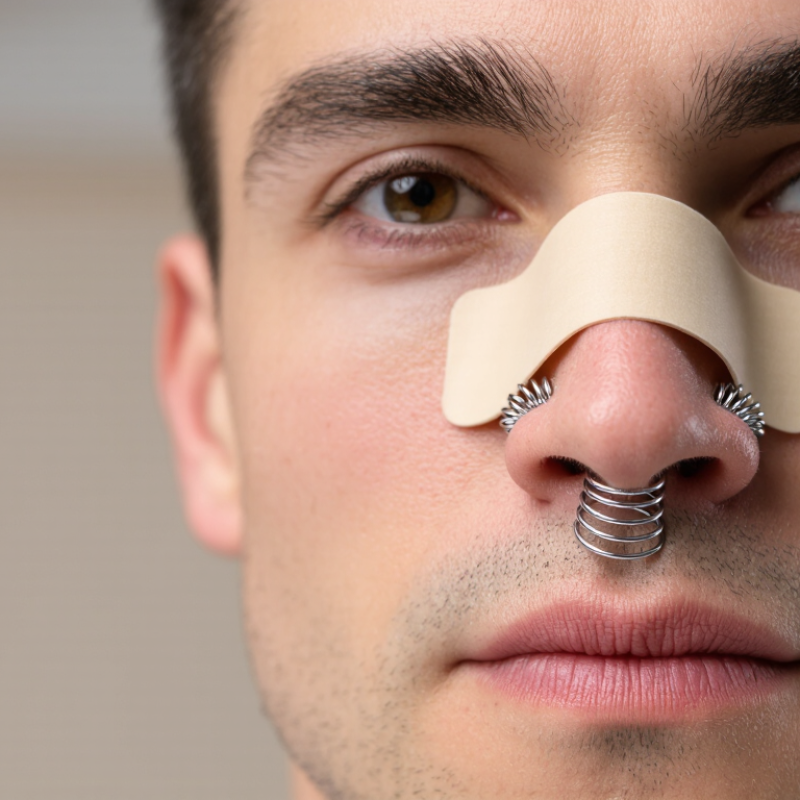
What Adhesive Nose Strips Are
Adhesive nose strips are small, spring-like bands placed across the outside of the nose. They contain a flexible support layer and skin-friendly adhesive edges. When applied above the nostrils, the strip gently pulls the nasal sidewalls outward. This may create more space for airflow. They contain no medicine and do not enter the nasal passage.
Their benefit is mechanical, not curative. A 2021 systematic review in the Journal of Clinical Sleep Medicine found that external nasal dilators did not consistently improve the apnea-hypopnea index. However, several studies reported better feelings of nasal openness, especially during exercise or mild nighttime congestion. The evidence is useful, but not perfect. Better airflow does not always mean better sleep.
How Adhesive Nose Strips Are Designed
Adhesive nose strips are designed as small external supports, not medicine. Their center usually contains a flexible polymer or spring-like band. When pressed across the nose, the band gently bends and creates an outward lifting force. This may widen the front nasal passages, especially during exercise or sleep. The strip does not travel inside the nose.
The adhesive layer matters as much as the lifting band. It must hold through skin movement, sweat, and facial oils, while remaining comfortable during removal. Designers often use skin-friendly medical adhesives with rounded edges. These edges reduce peeling and pressure points near the nostrils. A clean, dry nose improves contact. Moisturizer can weaken the bond.
Fit is not universal. A strip placed too high may lift little; one placed too low may irritate the skin. The width, stiffness, and shape must match different nose sizes. I once assumed stronger tension meant better breathing, but that is not always true. Excessive force can feel uncomfortable without creating meaningful airflow. Adhesive strips may support external nasal opening, yet they cannot treat congestion, allergies, or structural problems deeper inside the nose. Evidence also varies by user and activity, so comfort and measurable benefit should be considered together.
How They Work on the Nose
What Are Adhesive Nose Strips and How Do They Work?
Adhesive nose strips sit across the bridge of the nose. Each strip contains flexible bands that gently pull the outer nasal walls upward and outward. This movement can widen the nasal valve, a narrow passage near the nostrils. More space may reduce the feeling of blocked breathing, especially during sleep or exercise. The strip works mechanically. It does not dissolve mucus or reduce swollen tissue.
Clinical evidence remains mixed. A review in Sleep Medicine Reviews reported that external nasal dilators can improve the sensation of airflow, but they do not consistently reduce obstructive sleep apnea severity. The American Academy of Sleep Medicine cites an estimated 30 million American adults living with sleep apnea. That figure matters. Easier nasal breathing is not the same as treating airway collapse.
Placement changes the experience. Clean, dry skin helps the adhesive hold. The strip should sit above the nostril openings, not across them. Some users notice a wider breath within minutes. Others feel little difference. I would not treat comfort as proof of better oxygen levels. Skin irritation, tenderness, or poor adhesion can also occur. A small personal trial may help, but persistent snoring, gasping, or morning headaches deserves professional assessment.
What Are Adhesive Nose Strips and How Do They Work?
How external nasal dilators may affect the nasal valve during breathing
Adhesive nose strips sit across the outside of the nose. Their spring-like material gently pulls the lateral nasal walls outward, helping enlarge the narrowest part of the nasal airway, known as the nasal valve. The chart uses a normalized index where the unassisted condition equals 100. Representative study ranges suggest that external nasal dilators can improve nasal airflow and perceived breathing for some users, but they do not remove mucus, reduce internal swelling, or treat the underlying cause of nasal congestion.
Normalized educational comparison; actual results vary with nasal anatomy, congestion, placement, and activity.
Common Uses and Potential Benefits
Adhesive nose strips are flexible bands placed across the bridge of the nose. Their spring-like material gently pulls the sidewalls outward. This may widen the nasal valve area, making each breath feel less restricted. They do not deliver medicine. They simply create mechanical support.
Common users include people with nighttime congestion, exercise-related nasal resistance, or mild mouth-breathing habits. A strip may feel useful during a run, especially when nasal passages seem narrow. Some sleepers also report quieter breathing. The effect is often noticeable within minutes. Still, comfort varies. Oily skin, facial hair, and sweating can reduce adhesion.
Evidence remains mixed. A 2021 systematic review in Sleep Medicine Reviews found that external nasal dilators can improve the feeling of nasal airflow, but they do not consistently reduce snoring or improve sleep quality. The American Academy of Sleep Medicine estimates that about 30 million U.S. adults have obstructive sleep apnea. A nose strip cannot treat blocked breathing from throat collapse. That distinction matters. Persistent loud snoring, gasping, morning headaches, or daytime sleepiness deserves medical assessment. Skin irritation is also possible, particularly after repeated removal. Some users may need to test placement carefully. The strip can help, but it is not a complete solution.
What Are Adhesive Nose Strips and How Do They Work? - Common Uses and Potential Benefits
| Data Dimension | What the Evidence and Product Design Indicate | Practical Considerations |
|---|---|---|
| Definition | Adhesive nose strips are flexible, spring-like strips placed across the outside of the nose, usually over the upper or middle portion of the nasal bridge. | They are external devices and do not deliver medicine into the nasal passages. |
| How They Work | The strip gently pulls the skin and soft tissues outward, which may help reduce narrowing at the front of the nose and increase the available space for airflow. | The effect is mechanical rather than pharmaceutical and generally lasts only while the strip is applied. |
| Common Uses | Common uses include temporary relief of the sensation of nasal blockage, support during exercise, and use at night when a person experiences difficulty breathing through the nose. | They may be useful when airflow limitation is related to the nasal valve area, but they are not suitable for every cause of congestion. |
| Potential Breathing Benefit | By reducing external narrowing, strips may make nasal breathing feel easier for some users and may reduce the perceived effort of breathing through the nose. | Individual results vary, and improved airflow does not necessarily mean that an underlying nasal condition has been corrected. |
| Sleep-Related Use | Some people use nasal strips to encourage nasal breathing during sleep or to reduce the feeling of nighttime nasal obstruction. | They should not be considered a treatment for obstructive sleep apnea, loud chronic snoring, or repeated nighttime breathing pauses. |
| Exercise and Physical Activity | During exercise, the strips may help some users feel that nasal airflow is less restricted, especially when the front of the nose tends to narrow during inhalation. | They do not replace proper training, medical care, or treatment for asthma and other breathing disorders. |
| Limitations | Because the strips act on the outside of the nose, they generally do not remove mucus, reduce internal swelling, treat infection, or correct a deviated septum. | Persistent congestion may require evaluation for allergies, chronic inflammation, structural problems, or other medical causes. |
| Skin and Comfort Considerations | Possible issues include adhesive-related redness, itching, discomfort during removal, or temporary skin irritation. | Apply only to clean, dry, intact skin, avoid irritated areas, and remove gently according to the product instructions. |
| When to Seek Medical Advice | Professional evaluation is appropriate for persistent nasal obstruction, recurrent nosebleeds, facial pain, reduced sense of smell, or breathing pauses during sleep. | Stop using the strip if significant irritation, swelling, or an allergic reaction develops. |
| Overall Assessment | Adhesive nose strips can provide a simple, non-drug, temporary way to support airflow through the front of the nose. | Their benefits are most likely to be noticeable when external nasal narrowing contributes to the feeling of restricted airflow. |
General information only. Use adhesive nose strips according to the package instructions and consult a qualified healthcare professional for ongoing or severe breathing symptoms.
Safety, Limitations, and Proper Use
Adhesive nose strips are flexible bands placed across the outside of the nose. Their spring-like tension gently lifts the nasal sidewalls. This may reduce the feeling of blockage during sleep, exercise, or seasonal congestion. They do not deliver medicine. They only create more space at the nostril entrance. Not a cure.
Safety depends on the skin and the cause of congestion. Apply one strip to clean, dry skin, away from cuts, rashes, or irritated areas. Remove it slowly after moistening the adhesive. Redness, itching, swelling, or blistering means you should stop using it. People with sensitive skin may need a shorter trial. Never place a strip over an open wound. Children should use these products only with suitable professional advice.
Their limits matter more than their marketing appeal. A Cochrane Database of Systematic Reviews assessment found insufficient evidence that external nasal dilators improve obstructive sleep apnoea outcomes. They may reduce nasal resistance, but they cannot keep the throat airway open. Loud snoring, witnessed breathing pauses, morning headaches, or severe daytime sleepiness require medical assessment. It is tempting to call easier breathing a treatment. That distinction is easy to miss. Use the strip only as directed, and reconsider it if congestion persists beyond several nights.
Article Source:
Have Questions? We're Here to Help!
Give us a call at (864) 989-0566 or send us a message to discuss our testing equipment with an expert.